Laundry and utility rooms
This is where a washer leaks or a water heater lets go, so we usually lean toward a coating or surface that sheds water instead of one that soaks it up.
Damp smell, a musty rug or old tiles lifting? We test your slab first, then put down a floor that can live with it.
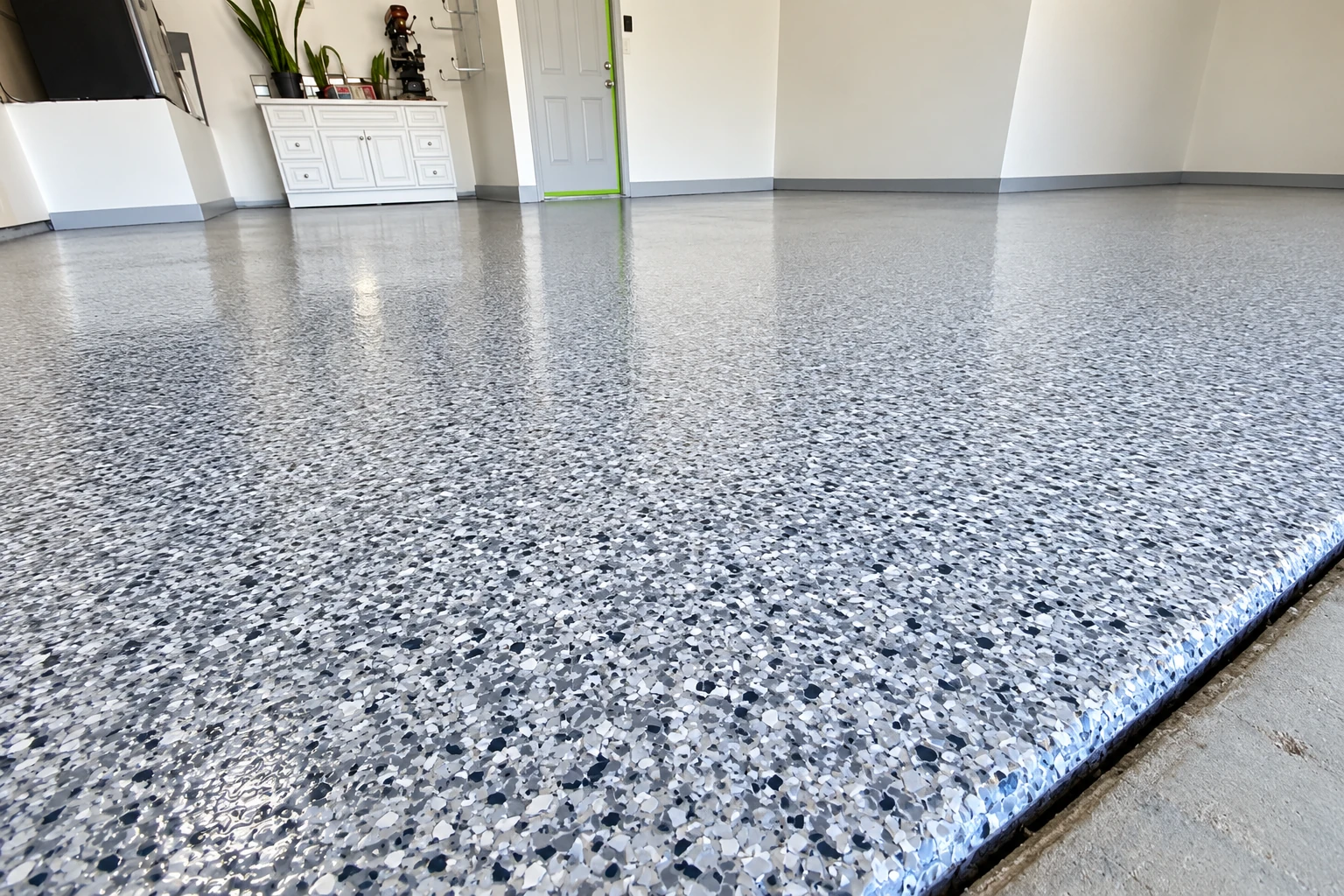
Basement flooring in Monterey means getting the concrete slab ready and putting down a covering that can handle life below ground. That's usually waterproof vinyl plank, tile or an epoxy coating, matched to how damp your slab tests.
Most calls start with a musty smell, carpet that feels damp or old tile popping loose. The price comes down to the room's size, the floor you pick, what shape the slab is in and whether the old floor has to come up first. Cracks to fix, a slab that tests wet or old tile that needs testing before removal all add work, while a dry, sound slab costs the least to cover.
The schedule mostly follows the slab, because a damp floor may need time to dry or an extra moisture step before anything goes down, and some materials need their own wait. When I come out, I look at the floor, measure and test the slab, and you get the estimate in writing, so you'll know what you're paying for before we start.
I test the moisture in your slab before suggesting a floor, because a basement floor that fails usually fails from water working up underneath it.
I've been doing this since 2013, and most floors I see peeling or bubbling were rushed before anything went down. Grinding and cleaning take time, and we spend that time.
We're licensed and insured. In California the state licensing board counts preparing the surface as part of flooring work, and that's how we price and run a basement job.
In a basement, moisture picks the floor for you, so I test the slab before I suggest anything. Concrete below ground draws water up from the soil, and a floor laid over a wet slab is the one that bubbles, peels or grows mold underneath. If the readings call for it, we plan for drying time or an extra step. I'll tell you that up front, even when it means the job starts later than you hoped.
Prep is where most failed floors went wrong, so we don't rush it. While I'm looking at the floor, I check for cracks, signs of water coming in and dampness in the air. Our concrete grinding and surface preparation opens up the surface so a coating or adhesive grabs sound concrete instead of old glue and dust. Cracks get attention for another reason too, since radon gas can move up through soil and cracks in a slab and collect indoors.
Here on the coast, foggy days and high water tables bring a lot of moisture into houses, and mold can climb past acceptable levels where a basement lacks good ventilation and protection from water getting in. That's why I steer damp basements toward floors that handle water, and why plain concrete sealing is sometimes all a storage room needs. We do this same work around the peninsula and in the cities around it, up through Salinas and over to Watsonville. My lead installer runs the crew, and I'm on site checking in.
This is where a washer leaks or a water heater lets go, so we usually lean toward a coating or surface that sheds water instead of one that soaks it up.
If you want it to feel like the rest of the house, we'll weigh waterproof vinyl plank against a coating, and the slab's moisture readings usually decide which one makes sense.
Dropped weights, rolling chairs and spilled paint are rough on soft flooring, so a coated concrete floor tends to hold up better and cleans up with a mop.
A room that's mostly shelves and boxes may not need a full new floor, and I'll tell you straight when a simpler, cheaper finish does the job.
Send the form and we'll reply within one business day to set a time. I come out, look at the floor, measure and test the slab, and you get a free written estimate with no obligation.
A rough square footage tells me what we're talking about before I drive out, and I'll measure it properly on site, so a good guess is plenty.
Tell me about leaks, wet carpet, a musty smell or a sump pump that runs a lot, since that history points me to where the slab is likely to test wet.
Let me know if there's carpet, old tile, sheet vinyl or bare concrete down there, because older flooring may need an asbestos test before we pull it up.
These photos show coatings, sealed concrete and floor layouts you can point at when we talk about what suits your basement.
Here's what people usually ask me about basement floors in Monterey, from damp slabs and old tile to cost and permits.
A 2026 flooring guide says tile, epoxy or waterproof vinyl plank is usually safer than standard laminate or hardwood in a basement that runs wet or whose condition is uncertain. An older 2013 federal energy profile warned against carpet or vinyl over an uninsulated slab, because they trap moisture and invite mold. The two disagree on vinyl, so I let your moisture test settle it.
Installing about 1,000 square feet of new flooring in Monterey usually costs about $3,500 to $13,000 per job. Where yours lands depends on the floor you pick and how much the slab needs before it goes down. I'll measure and test the slab on site and put your number in writing.
The floor waits, or the slab gets an extra step first. One luxury vinyl tile maker's guide says that when test results go past what its adhesive allows, the area must dry further or get a moisture-mitigation system, a coating that holds moisture back, before installation. Other products set their own limits, so we follow the maker of the floor we're using and build that into your schedule.
Plan on it. One flooring maker's install guide says to presume old floor material contains asbestos unless you're positively certain it doesn't, and rules may require testing and control how it's removed and thrown away. If your old tile or sheet flooring might contain it, we get it tested before we pull anything up.
Ask before you assume you don't, because Monterey's building permit covers building projects small and large. The city's Building and Safety Division helps owners who aren't sure whether their project qualifies. We check with the city or county building office before we start, and if a permit's needed, we take care of the paperwork with you.
With one maker's vinyl plank, the room is back to normal use after about 5 days. Those instructions have the planks sit in the room at least 48 hours to adjust before install. After install, they ask for light foot traffic for 24 hours, no heavy furniture or rolling chairs for 48 hours and no wet mopping for 5 days. The job is backed by our satisfaction guarantee.
A moisture reading tells you which floors are worth pricing, so call (831) 204-4420 or send the form to Truefinish Monterey Epoxy Flooring.