Worn or flaking driveways
A driveway with a rough, worn top and stable concrete underneath is the classic call. Oil stains get cleaned out first, since a dirty slab won't hold a new layer.
Driveway or patio looking scaled, stained and patchy? We repair what's loose, then lay down a fresh, even surface over the slab you have.
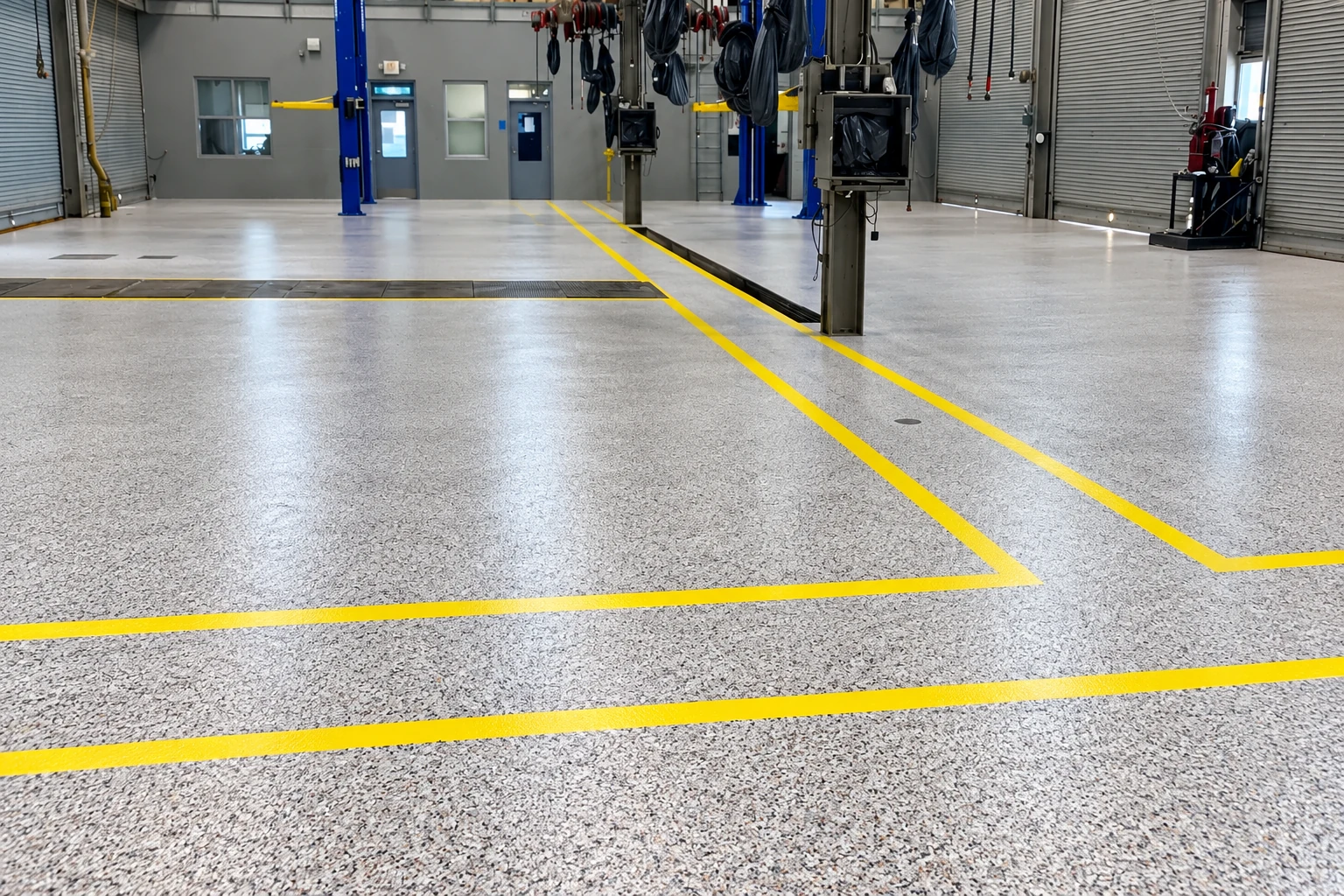
Concrete resurfacing in Monterey means we spread a fresh layer of cement-based mortar over the slab you already have and finish it into a new surface, so a worn driveway, patio or walk looks even and uniform again without tearing it out.
Most folks call me when the top of their concrete is flaking, stained or patched in three different shades of gray, and the slab underneath is still in decent shape. That last part matters, because resurfacing gives the slab a new face, not a new structure, so it only works on concrete that's solid.
What moves the price is mostly the size of the area, how much repair the slab needs before we start, how much oil and grime has to come off, and how many coats go on. The schedule turns on those same repairs plus the time the new surface needs to cure before you walk or drive on it. I'll look at your slab in person, and you get the estimate in writing.
Most floors that peel or bubble were rushed before the first coat went on, so we fix loose and damaged spots first, even when that adds repair work to your estimate.
If your slab is sinking or badly cracked, or a simpler fix like sealing would do the job, I'll tell you so before you spend money on a resurfacer.
We've been in business since 2013, my lead installer runs the job, and I'm on site checking in, so the person who looked at your slab keeps an eye on it.
Resurfacing is meant for a slab that's still solid, so the first thing we do is check for loose spots, hollow areas and sinking, and repair what needs it before anything new goes down. Then the surface gets cleaned hard, because oil, grease, dirt and old curing compound keep the new layer from bonding, and on a driveway that usually means working out the stains under where the car parks. If the floor is more out of level than worn, say a basement or shop slab you want flat, self-leveling concrete and overlays is usually the better tool.
We mix the resurfacer, spread it and finish it, following the maker's instructions for the product on your job, since each one sets its own steps for coats and curing. Right after finishing, the fresh surface gets kept damp and shielded from direct sun, wind and rain while it cures, because that's what the maker's sheet calls for. Pool decks have their own concerns with water and bare feet, so we handle those under pool deck coatings and resurfacing.
Cleanup is part of the job here too. Around Monterey Bay, storm drains run untreated to local waterways and the ocean, and concrete and mortar are alkaline and toxic enough that even a little rinse water can hurt aquatic life, so regional stormwater guidance keeps washout in a contained, watertight setup away from drains and out of the soil, street and gutter, and that's how we clean up. We do this same work across the peninsula and the cities around it, up through Salinas and over to Watsonville.
A driveway with a rough, worn top and stable concrete underneath is the classic call. Oil stains get cleaned out first, since a dirty slab won't hold a new layer.
Patios and walks that look patchy or uneven in color can get a uniform new face, as long as the slab hasn't heaved or sunk out of shape.
A garage slab that's pitted and worn but still solid can be resurfaced, and if a coating would suit how you use the space better, I'll tell you which one fits.
Business owners call when the concrete out front looks beat up. If the slab is sound, resurfacing gives customers an even surface without tearing it out and pouring new.
Send the form and we'll reply within one business day to set a time. I come out, look at the slab, measure and test it, and you get a free written estimate with no obligation.
Photos of the slab, its rough size and any cracks or sunken spots help me see what I'm walking into, so the visit goes straight to what matters on your floor.
I come out to look, measure and test the slab, because whether the concrete is sound decides whether resurfacing is the right call at all.
You get the estimate in writing, so you can set it next to other quotes and ask each contractor the same questions about repairs and coats.
Example photos of resurfaced driveways, patios and walks, plus overlay textures and colors you can bring up when we talk about your slab.
Straight answers to what people ask before resurfacing a driveway, patio or walk, from cost and cracks to permits and licensing.
Concrete resurfacing across the US usually runs about $1,000 to $4,500 per project, and that's a national figure for the whole job, not our price. Where yours lands depends mostly on how much repair the slab needs before the resurfacer goes on, so I'll look at it in person and give you the estimate in writing.
Sometimes, as long as the concrete underneath is sound. Resurfacer makers call for removing unsound concrete and repairing damaged areas first, and one maker says old cracks showing back through can't be completely prevented, especially on a settled slab. If yours has sunk, I'll be honest that those cracks can find their way back, so you can weigh that before you spend.
If the work reaches the driveway approach, curb or sidewalk out in the public right of way, the city requires a permit, and the city has an application for that work. Its permit list doesn't name resurfacing itself, so we check with the city building office before we start, and if a permit's needed we take care of the paperwork with you.
One coat can work, but one maker calls a second coat optional and recommended, because it gives the new surface a more even, uniform look. Coats are an easy place for quotes to differ, so ask each contractor how many their price includes. I'll tell you how many I'm figuring for your slab and why.
California's Contractors State License Board licenses concrete contractors, the trade that forms, pours, places and finishes flat concrete work. A general building contractor can take a specialty job like this when it holds that specialty license or subcontracts to a licensed specialty contractor, so it's fair to ask who'll actually do the work. We're licensed and insured.
Catching a flaking surface while the slab underneath is still solid keeps it a resurfacing job instead of a bigger repair.