Garage floors
A metallic garage floor wipes clean of the dirt and drips that soak into bare concrete, and it makes the garage a room you don't mind people seeing when the door goes up.
Tired of a stained, cracked gray slab? We fix the concrete first, then lay a metallic finish with depth and shine that's yours alone.
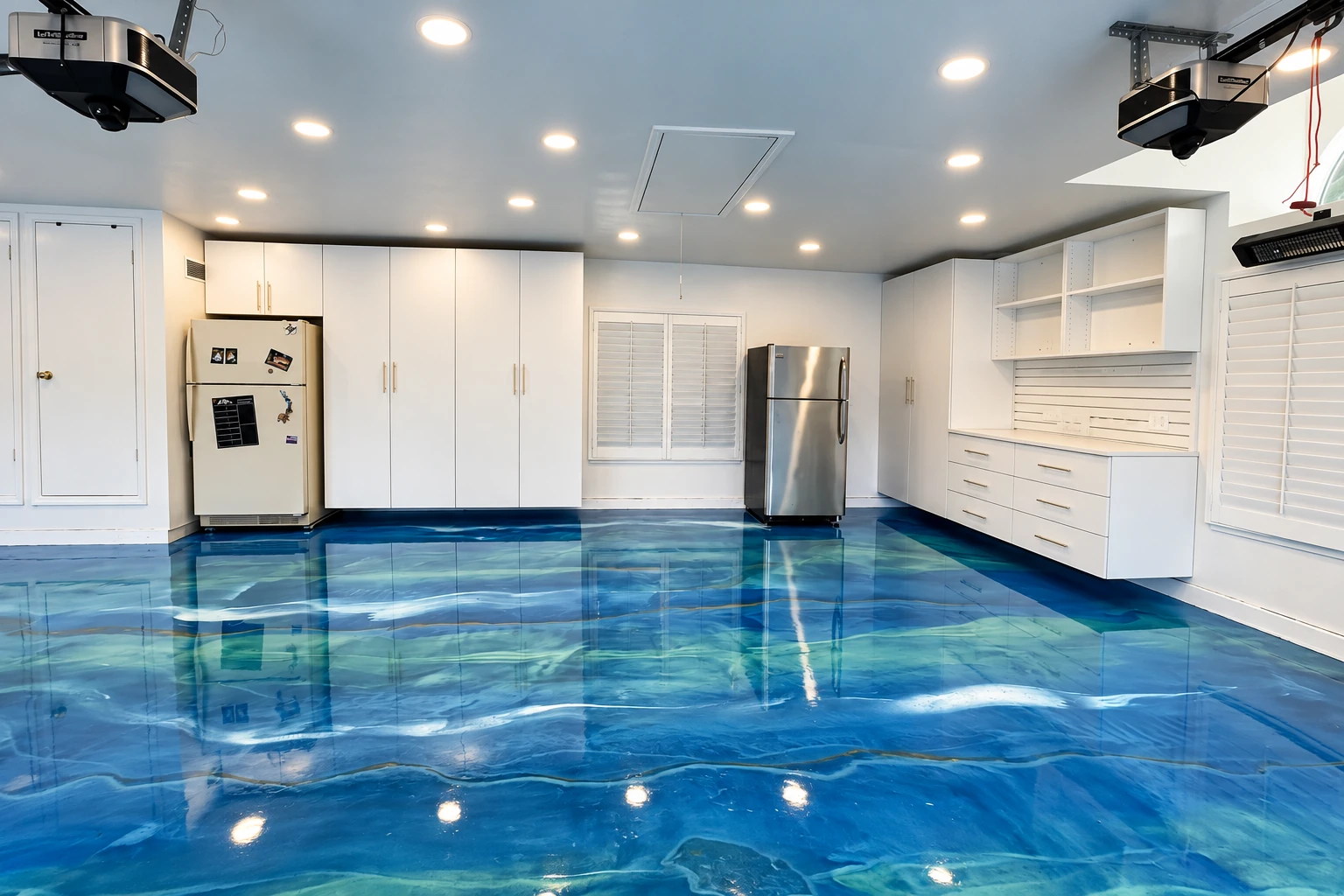
Metallic epoxy flooring is a glossy epoxy finish with metallic pigment worked into the color coat, and our crew puts it down over garage, basement and shop slabs in Monterey to turn plain gray concrete into a floor with real swirl and depth.
Most folks call me because the slab is stained, dusty or patched and they want a floor they're happy to walk out onto. Metallic gets you there, but it's a smooth, high-gloss system, so it's honest about what's underneath and will show the concrete's flaws if they're left alone.
The price mostly comes down to the size of the floor, how much repair the slab needs, whether old coatings have to come off, how the slab tests for moisture and which topcoat suits the room. The schedule turns on those same repairs, plus cure time between coats and the slab's temperature, since coatings need the concrete in the right range. I'll give you your own figure once I've seen the floor.
I learned this trade hauling grinders and mixing buckets on a coating crew, started this business in Monterey in 2013, and we work across the peninsula, up through Salinas and over to Watsonville.
My lead installer runs your floor from grinding to topcoat, and I'm on site checking in, so you've got two people who know your floor and what you picked for it.
You get the estimate in writing, and I'll walk you through what each part covers, from grinding and repairs to the topcoat, so you know exactly what you're paying for.
It starts with me at your place, looking over the floor, measuring and testing the slab. No two metallic floors come out the same, so I'll show you floors we've done and help you pick a base color with the final shade in mind, because the base sets the tone for everything that goes over it.
Prep comes next, and it's where I won't cut corners, because most floors that peel or bubble were rushed before the first coat went on. Our crew diamond-grinds the concrete so the epoxy has a clean, rough surface to grip, then we fix dips and cracks before any color goes down, since a smooth metallic finish lets flaws underneath show right through. We test for moisture too, because one coating maker says a slab poured on the ground needs a proper moisture barrier, or seasonal ground moisture can push too much vapor through even after the slab tested fine. Saw-cut joints can be filled and coated over, but the coating may crack along them if the slab moves a lot, so I'll talk that through with you first.
With the slab ready, we prime it, lay the metallic base coat and work the pigment while it's wet to build the swirls and depth, then seal it all under a clear topcoat. A metallic floor isn't right for every room, and I'll tell you when it isn't. Urethane cement flooring handles heat and harsh cleaning better, and polished concrete flooring gets its shine from the slab itself, which can be the simpler fix when the concrete's already in good shape.
A metallic garage floor wipes clean of the dirt and drips that soak into bare concrete, and it makes the garage a room you don't mind people seeing when the door goes up.
When a basement slab is sound and dry, metallic gives it a finished look without carpet laid over the concrete, which is why moisture testing matters so much down there.
Business owners like a floor that looks sharp in front of customers and still cleans up fast at closing time, and a metallic finish handles both in the right space.
Entries, studios and living areas built on a concrete slab can skip the cover-up flooring, so the metallic coat becomes the finished floor you walk on every day.
Send the form and we'll reply within one business day to set a time. I'll come out to see the floor, measure and test the slab, and you'll get a free written estimate with no obligation.
A length and width is plenty to start, since size is a big part of the price, and I'll measure it properly when I come out to see it.
Tell us whether it's a garage, basement, shop or room in the house, because the space decides things like the topcoat and how much moisture testing we plan for.
Mention any cracks, low spots, stains or old paint you already know about, since repairs come before any color goes down and they're a real part of the job.
Swirled metallics, darker and lighter base colors and other concrete finishes, shown as examples to help you talk through looks for your floor.
Here's what people ask me most about metallic epoxy, from cost and permits to when you can park in the garage again.
Installed metallic epoxy usually costs about $8 to $15 per square foot across the US, with grinding, moisture testing, primer, the metallic base coat and a clear topcoat included. That's the national going rate, not our price, and repairs, old coatings and the size of the floor all move your number. Our work is backed by our satisfaction guarantee.
Check with the city first, because Monterey requires a separate permit to alter or repair any structure, and its Building and Safety Division can tell you whether your floor work counts. When a job might need a permit, we check with the city or county building office before we start, and if one's needed, we take care of the paperwork with you.
Look them up on the Contractors State License Board website or call the board's toll-free line, which is what the city tells owners to do before hiring. We're licensed and insured. For a metallic floor, also ask to see floors the installer has finished, since the random pattern depends on the installer's eye and experience.
Every metallic floor looks a little different because the pigment settles into a random pattern as it's worked, so no two come out exactly alike. The base color shifts the whole look too, since a white or light base gives a lighter finish and a black or darker base darkens the metallic effect. Use photos to choose a color family and the movement you like, not as an exact copy.
In one guide's garage schedule, you can walk on the floor 4 to 6 hours after the final polyaspartic topcoat and drive on it after 24 to 48 hours. Your own timing depends on the products we use and the conditions while it cures, so we'll tell you when it's ready before you pull the car back in.
It can, and one cost guide warns against an epoxy clear coat as the topcoat on a garage, saying sun coming through the garage door yellows it within one summer. So when you compare quotes, ask which topcoat each one includes. I'll tell you which one we'd use on your garage and why.
We keep evening and weekend hours, so call (831) 204-4420 after work or use the form to set a time.