Epoxy Floor Coatings
We grind the slab until it's rough and clean, fill cracks and roll on an epoxy system for garages, laundry rooms and workrooms, so the coating bonds to concrete instead of old sealer.
Truefinish Monterey Epoxy Flooring puts epoxy, polyaspartic and polished concrete floors into Salinas garages, basements, patios and shop floors, and we grind and prep the slab properly before any coating goes down.
We're based in Monterey and work across the peninsula and the cities around it, up through Salinas and over to Watsonville, with plenty of stops in between like Prunedale and Castroville. In Salinas the calls come from two directions. Homeowners have a garage slab that's oil-stained, cracked or wearing an old sealer that's flaking off, and business owners have a shop, warehouse or packing floor that takes pallet jacks, spills and hard cleaning day in and day out.
What moves the price is mostly the slab you've got, because how much grinding, crack repair and old-coating removal it needs before anything goes down can matter as much as the square footage or the system you pick. The schedule turns on that same prep, on getting the space cleared out, and on how long the coating needs to cure before you walk or drive on it. A floor coating is only as good as the concrete under it, so your own figure comes from the estimate, after I've seen the floor.
I come out to look at the floor, measure it and test the slab, because most floors that peel or bubble were rushed before the first coat, and the test shows what your concrete needs.
Our crew does the work with my lead installer running it, and I'm on site checking in, so the person who looked at your floor stays close to how it's going.
If a sealer or a polished slab suits your floor better than a full coating, I'll tell you, because I'd rather you pay for what the floor needs than for extras.
We grind the slab until it's rough and clean, fill cracks and roll on an epoxy system for garages, laundry rooms and workrooms, so the coating bonds to concrete instead of old sealer.
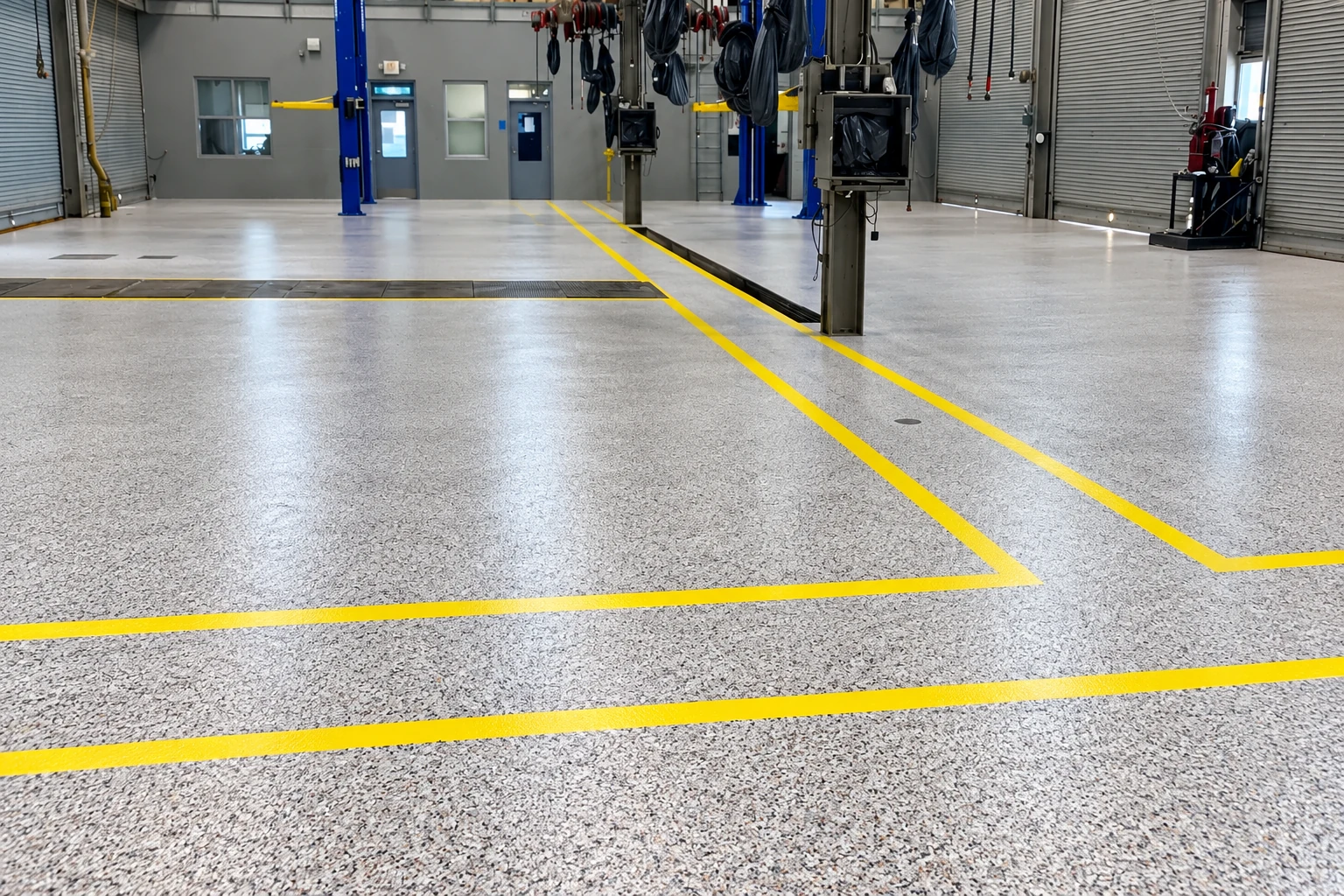
Shop floors, packing areas and warehouses take pallet jacks, chemicals and steady traffic, so we build thicker systems there and plan the work around when your floor can be shut down.
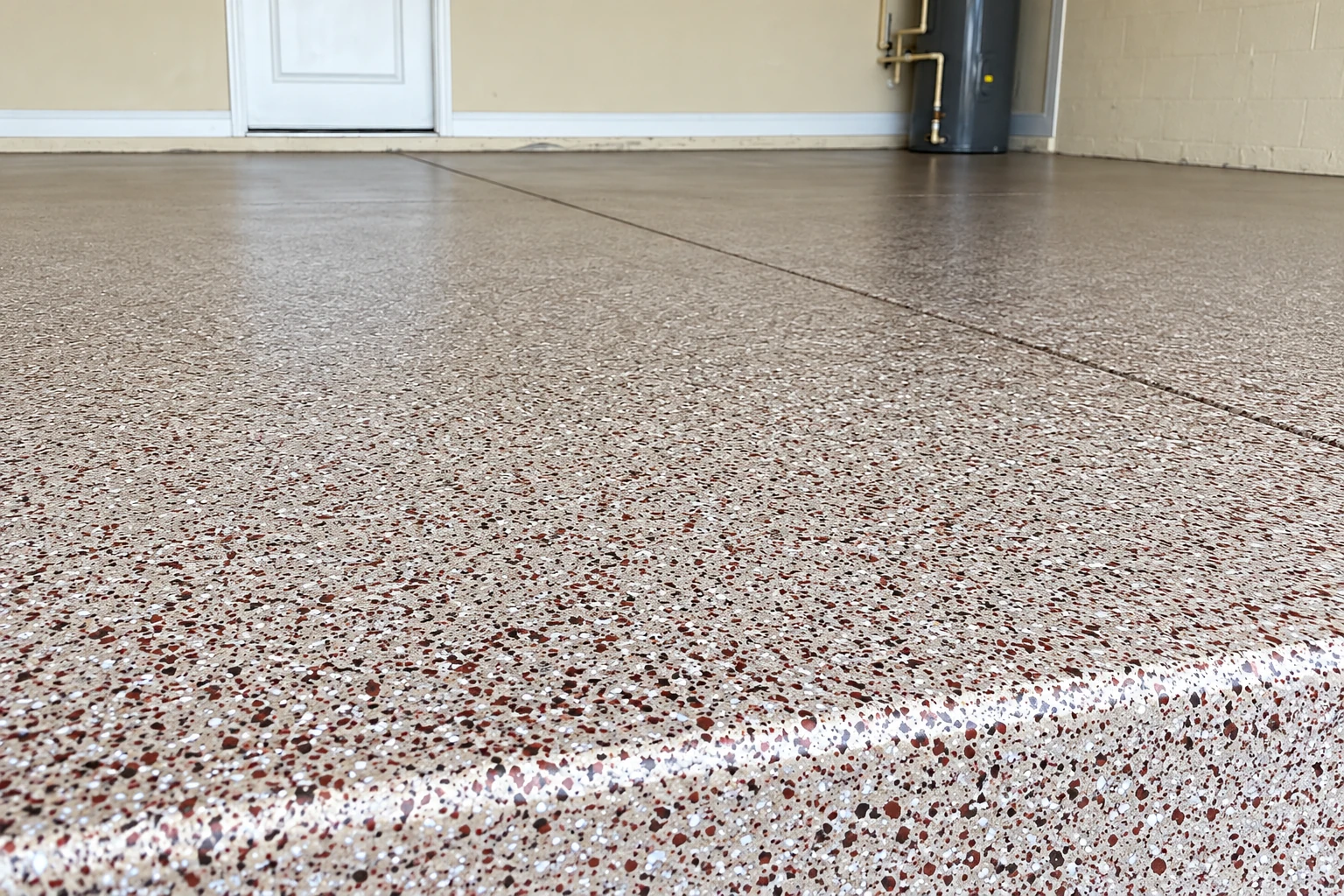
Most garages we see here have oil spots, tire marks or a thin old sealer, and we grind that off before laying a flake coating that stands up to hot tires.
A fast-curing coating that gets you back into the garage sooner than epoxy does, and because it sets quickly, our crew works in small sections on a slab that's already prepped.
A swirled, poured-stone look for a showroom, office or living area, and because no two pours move the same way, I'll show you samples so you know what you're getting.
Built for packing sheds, cold rooms and wash-down areas, this thick, troweled floor handles hot water, cleaning chemicals and temperature swings better than a standard epoxy coating does.
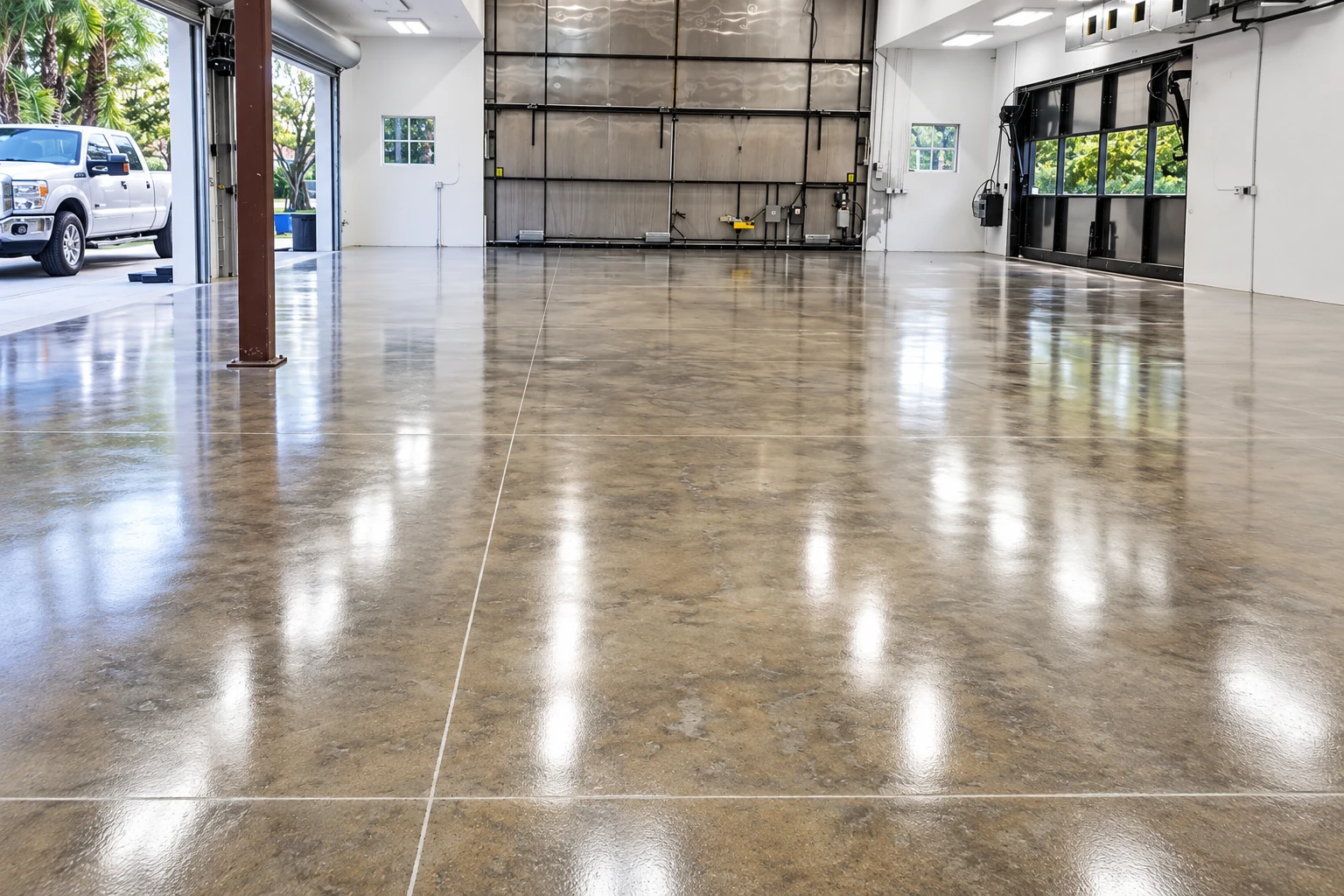
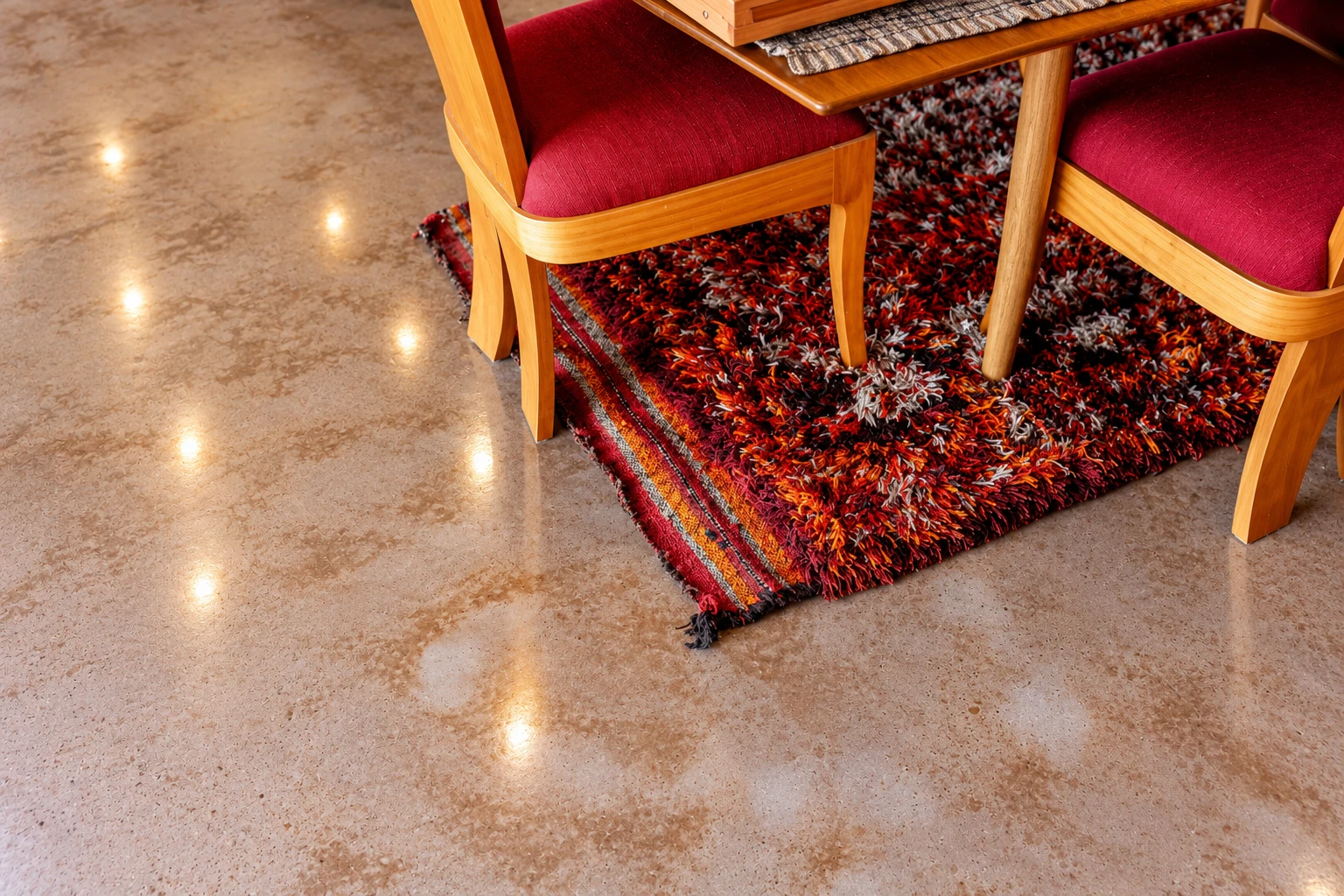
We grind the existing slab through finer and finer passes until it shines, which suits a sound slab in a shop or home, and there's no coating on top to peel.
Acid or water-based stain colors the concrete itself instead of sitting on top, which suits patios and interior slabs, though old patches show through, and I'll point those out first.
Epoxy terrazzo with glass or stone chips suits a lobby or business entry that sees heavy foot traffic, and it needs a flat, well-prepped slab before the mix goes down.
Below-grade slabs can push moisture up through the concrete, so I test before we pick a system, since a coating over a damp slab is the usual reason a basement floor lifts.
This is the step most failed floors skipped, so we diamond-grind off sealer, paint and glue down to clean, rough concrete a coating can grip, with dust collection running the whole time.
A penetrating or film sealer protects a slab from oil and water without a full coating on top, and on a lightly used garage or patio it can be all you need.
When a patio, walkway or garage slab is scaled, chipped or patched all over, a thin cement overlay gives it a fresh surface without tearing out and repouring the concrete.
Uneven or dipped interior slabs get a pourable cement layer that levels itself, which matters before tile, plank flooring or a coating goes down, because highs and lows show through.
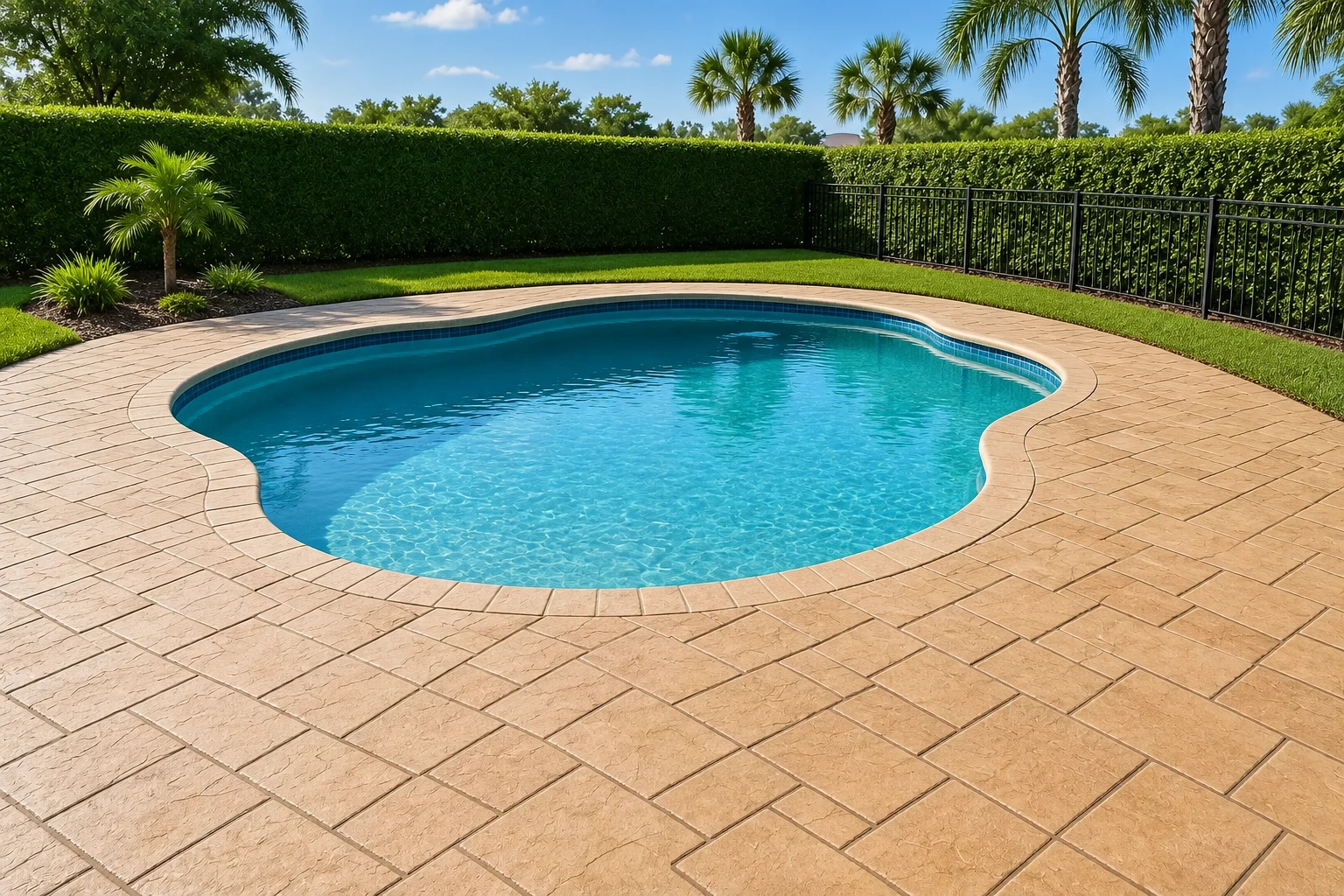
Pool decks take bare feet, sun and pool chemicals, so we fix cracks and resurface with a textured coating that gives wet feet better grip than a slick, sealed finish.
Old epoxy, paint or mastic, the black glue under old tile, has to come off before anything new goes on, so we grind it down to bare concrete ready for the next floor.
Send the form and we'll get back to you within one business day. Then I come out, look at the floor, measure and test the slab, and you get a free written estimate with no obligation.
You get the estimate in writing, so you can read it over at the kitchen table and hold it up against any other bids you're getting before you decide anything.
I started as a helper on a coating crew, hauling grinders and mixing buckets, and I've run this business out of Monterey since 2013, so I've seen plenty of floors fail from rushed prep.
Our work is backed by our satisfaction guarantee, and if anything about the finished floor isn't sitting right with you, I want to hear about it while I'm there.
Here are the questions Salinas homeowners and business owners ask us about permits, licensing and debris before a floor job starts.
We find out before we start, because when a job might need a permit we check with the city or county building office first. If one's needed, we take care of the paperwork with you. I'd rather settle that question up front than halfway through grinding your floor.
You apply on the city's online permit site, which the Community Development office runs. Create a public account before you pay any fees, then use Apply for Permits to start the application. The same site lets you search permit records for a property and schedule inspections, so everything for the job stays in one place.
Only for minor work under the Contractors State License Board's exemption, whose dollar limit went from $500 to $1,000, and only when the job needs no permit and the person employs no one on it. The board licenses and regulates contractors across the state. We're licensed and insured, so that limit doesn't come into it when you hire us.
Under the city's debris rules, only its franchised hauler may collect construction and demolition debris, and you'd contract with that hauler unless an exception applies. A licensed contractor hauling debris as part of its own job is exempt, though a debris box dropped off a truck isn't. Those rules were written for the city's 2022 code, so check with the city before hauling anything yourself.
These are the cities with their own page on our site, not the only places we work, so if your address isn't listed, call or send the form and ask.
Call (831) 204-4420 or use the form, since we keep phone hours into the evening, weekends included, so you can reach us after work.