Basement and lower-level slabs
The concrete's already there, so stain adds color without building up a new layer. These floors tend to hold moisture, and that's why the dryness check matters most down here.
Plain gray slab, or old carpet glue and paint on the concrete? We clean it down and stain it into a floor with real color.
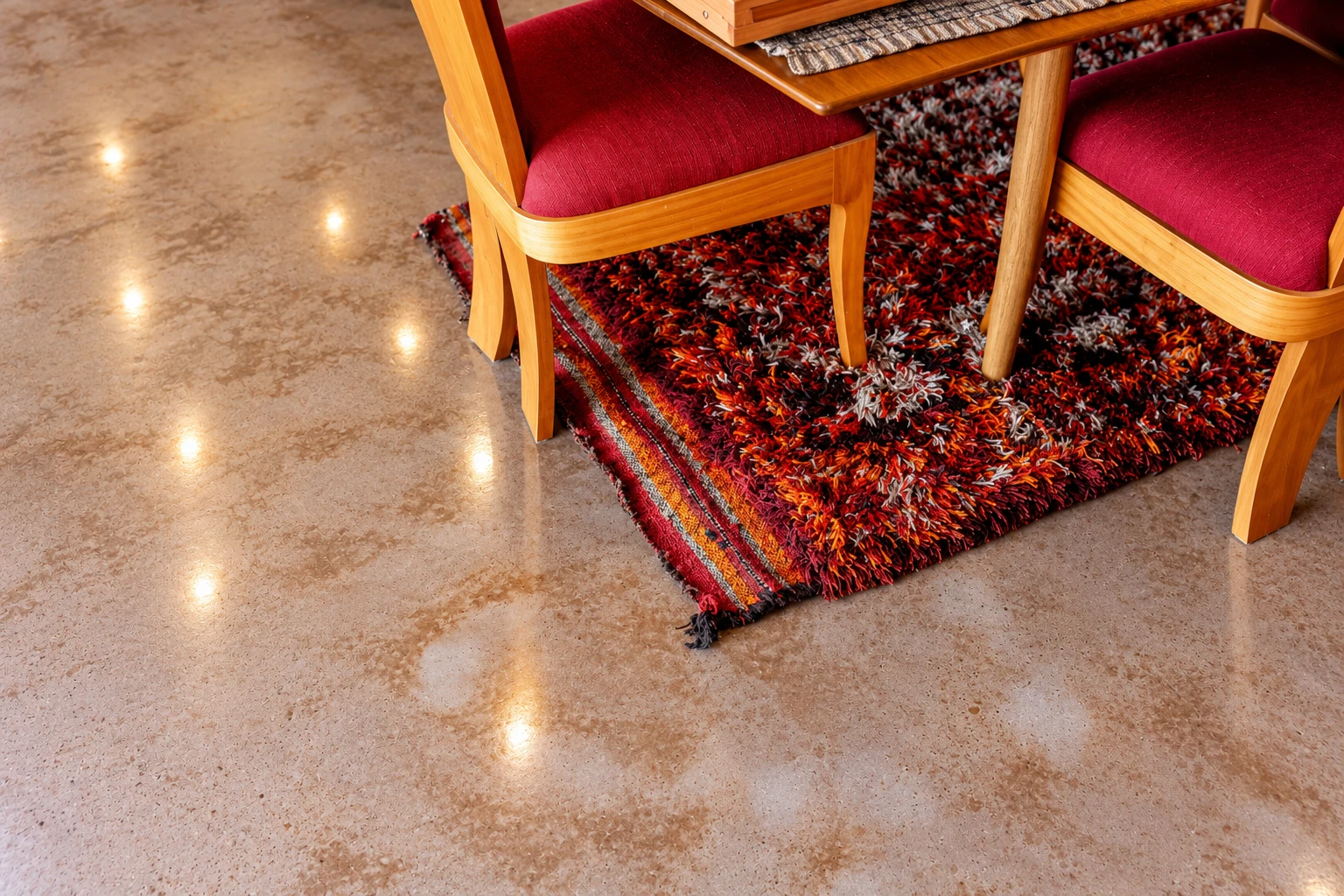
Stained concrete flooring in Monterey colors the slab you already have with a stain that reacts with the concrete or soaks into it, and then a sealer protects it, so you get translucent, mottled color instead of a coating sitting on top.
Most of the price comes from what's on the floor now, because old sealer, paint, carpet glue or tile mastic all have to come off before stain will take, along with the size of the space and how many colors you want. The schedule depends on the slab. New concrete should be fully cured for 28 days before it's stained, and older concrete has to be clean and dry, so you'll get your own number in a written estimate after I see the floor.
I started this business in Monterey in 2013, and we work across the peninsula and the cities around it, up through Salinas and over to Watsonville. California covers prepping surfaces and applying stains and sealers under its painting and decorating contractor class, so it's fair to ask anyone you're considering how they're licensed. We're licensed and insured.
Most floors that peel or bubble were rushed before the first coat went on, so we take the time to strip and clean the slab before any stain touches it.
If a simpler finish suits your floor better, I'll tell you plainly, because I'd rather you know what you're paying for than end up with a look your slab fights.
I come out to test and measure, my lead installer runs the job, and I'm on site checking in. Our work is backed by our satisfaction guarantee.
Stain is honest to a fault. It shows whatever is on the slab, so a paint drip or a leftover patch of sealer turns into a blotch right through the color. That's why we clean off old sealer, paint and glue first. I also test the slab when I come out, because a floor that's still holding moisture shouldn't be stained and sealed. One stain maker's quick check is to tape a square foot of plastic to the floor and look under it the next day. Control joints and the edges along the walls are usually the last spots to dry.
Then we go over sealer choices with you, because the sealer changes the color about as much as the stain does. Epoxy and solvent-based sealers give a deep, rich look, and water-based ones tend to tone it down. The Monterey Bay Air Resources District has a rule aimed at cutting VOCs, the solvent fumes coatings give off, from coatings such as stains, so the stain and sealer we pick for your floor have to fit that district rule.
If your slab is below grade, our basement flooring page covers the other finishes we put down there. If you want more pattern and texture than stain can give, take a look at terrazzo flooring before you decide.
The concrete's already there, so stain adds color without building up a new layer. These floors tend to hold moisture, and that's why the dryness check matters most down here.
New concrete takes stain well once it's had its full cure, so if you're pouring an addition or a shop floor, plan the staining into the schedule from the start.
Pulling up carpet or tile often leaves a slab worth keeping. The glue and mastic have to come off first, but the concrete underneath can become your finished floor.
Business owners call us when a floor has to work hard, and a stained, sealed slab gives a showroom, studio or office real color on concrete they already own.
Send the form and we'll reply within one business day to set a time. I come out, look at the floor, measure and test the slab, and you get a free written estimate with no obligation.
I check the slab for moisture and look at what's on it before I price anything, so the number covers the prep your floor actually needs and not a guess.
Carpet glue, tile mastic, old sealer and paint each change the prep, so mentioning it on the form helps me plan the visit and check the right spots.
Bring photos of floors you like, because the stain and the sealer both shape the final color, and it's much easier to choose when we're looking at your concrete.
These sample photos show stain colors, sealer sheens and floor layouts we can talk over, so you can point at what you like when we meet.
Here's what Monterey homeowners usually ask before staining a floor, from what it costs to where the rinse water goes.
Across the US, a basic single-color stain job with sealer and minimal prep usually runs about $3 to $6 per square foot. That's the market's typical range, not our price, and stripping old coatings, adding colors or dealing with a damp slab push it higher. I'll measure and look at your floor, and you'll get our number in writing.
It may not, because acid stain can react only a little or not at all on old, worn concrete or on concrete that's had a lot of running water over it. On those floors, or when you want a color acid stain can't make, one stain maker offers its water-based stain instead. I'll look at your slab and tell you which way I'd go.
Properly sealed and kept up, stained concrete lasts for decades and rarely needs replacing, and it resists tearing, gouging, mold and water damage. The sealer is what protects the color, so plan on resealing as part of owning the floor. When a worn spot looks tired, touch-up staining and a fresh coat of sealer can often bring it back.
Water-based products are the easy ones to live with, and a solvent-based sealer takes more care indoors. One maker describes its water-based concrete stain as low odor and low VOC. For a solvent-based sealer used inside, one maker's instructions call for good ventilation and putting out pilot lights and open flames, so we plan around your water heater and stove before sealing day.
It doesn't go down the storm drain, because Monterey's city code bars anything but storm water from entering the city's storm drain system. The city's examples of barred discharges include construction fluids like paint, dirt or sediment, and rinse or wash water. Ask any crew how they'll collect and handle it. We collect ours and keep it out of the gutter.
Call (831) 204-4420 or send the form with the slab's age, what covers it now and its rough size, so I come out ready.