Stamped and colored patios
Color and pattern are what you paid for on a stamped patio, and a good seal keeps them looking rich while spills and sprinkler water bead up instead of soaking in.
Concrete that soaks up water and spills or looks faded? We seal it so it sheds water and holds up better against stains.
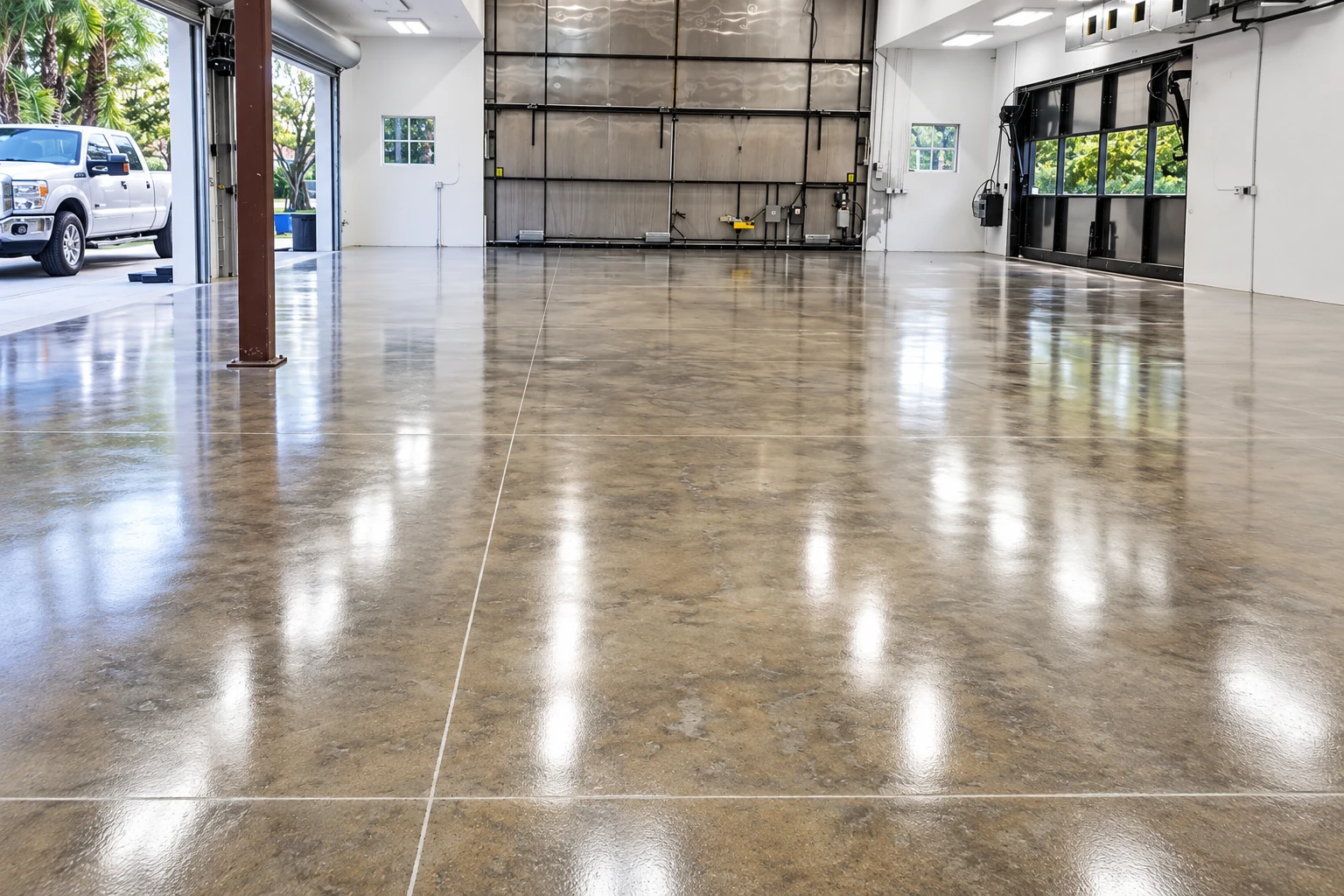
Concrete sealing in Monterey is a coat we put on your driveway, patio, walkway or floor. It either forms a thin film bonded to the top or soaks into the pores, so the concrete sheds water and holds up better against stains.
Most calls start the same way. The concrete goes dark and blotchy every time it gets wet, oil and leaf stains won't come out, or an old sealer has gone flaky and dull. The price comes down to how much concrete you have, how textured it is and which sealer you pick. The biggest factor is whether an old coat has to come off first, because stripping failed sealer is real work. The schedule turns on when the slab is dry enough to take sealer and, on new concrete, how far along the cure is. I come out, look at it and test it, and you get the estimate in writing.
We've been doing this since 2013, and we're licensed and insured. That's worth checking with anyone you hire, because California only lets someone skip a contractor's license on small jobs under the state's $1,000 limit when they have no one working for them, so a sealing crew with employees on the job needs one. We're based in Monterey and work across the peninsula and the cities around it, up through Salinas and over to Watsonville.
I come out myself to look at the slab, measure it and test it, so the sealer we suggest fits your concrete and the way you use it, not a guess over the phone.
Most finishes that peel or flake were rushed before the first coat went on, so our crew spends the time up front getting the surface ready before any sealer gets opened.
Our crew does the work with my lead installer in charge and me checking in on site, and the work is backed by our satisfaction guarantee.
The first decision is which sealer to use, and I help you make it because it decides how your concrete will look. One kind sits on top as a film and deepens the color. The other soaks in and leaves the concrete looking natural, close to how it looks today. If all you're after is keeping water and stains out, I'll tell you straight when the simpler soak-in sealer suits you better. The local air district's coatings rule covers sealers along with paints and stains, so ask any crew how the product they suggest fits that rule. It's a fair question, and we'd rather you ask it before anything gets ordered.
Before any sealer goes on, the concrete has to be clean and completely dry, since sealer can't bond or soak in on a dirty or damp surface. If an old acrylic sealer is loose, flaky or discolored, it has to come off first. That can mean sand or soda blasting, high-pressure washing or chemical stripping, followed by a thorough cleaning. Then we put the new sealer on with a light hand, because too much topical sealer, or sealer put on too soon, can spoil how the finish looks.
Sealer protects concrete that's still in decent shape, but it won't hide cracks, pits or worn spots. When a slab is past that point, concrete resurfacing and overlays can give it a fresh top to seal. Indoors, self-leveling concrete and overlays can flatten a wavy floor before any coating goes on.
Color and pattern are what you paid for on a stamped patio, and a good seal keeps them looking rich while spills and sprinkler water bead up instead of soaking in.
Bare concrete drinks up oil like a paper towel, so a sealed driveway buys you time to wipe up a drip before it turns into a dark spot that won't come out.
Walks and steps take rain, foot traffic and dirt every day, and a sealer helps them shed water and keeps them easier to clean without a lot of scrubbing.
A plain sealer is a simple way to keep spills from soaking into a garage or basement slab, and I'll tell you if garage floor coatings suit the way you use it better.
Send the form and we'll reply within one business day to set a time. I come out, look at the concrete, measure it and check any old sealer, and you get a free written estimate with no obligation.
If it's new, tell us roughly when it was poured, because sealing waits on the cure and that's what sets when we can get you on the schedule.
A rough size or just a description like a two-car driveway and a back patio is plenty to start, and I'll measure it properly when I come out.
If there's an old sealer that's peeling, flaky or discolored, mention it, because whether it has to come off first makes a big difference to the work involved.
These example photos show color-deepening and natural-look sealers, stamped patterns and coated floors, so you can point to the look you have in mind.
Here are straight answers to what people usually ask before sealing a driveway, patio or walkway around Monterey.
Most stamped concrete gets a film sealer, because that's the usual pick for making the color and pattern stand out. The industry guidance on this is written for stamped concrete, so on a plain slab treat it as a general rule of thumb. Either way, ask your contractor whether they plan a film, penetrating or hybrid sealer and how it'll change the color.
New concrete has to cure before it's sealed, either fully or to a certain point, and the industry standard for a full cure is 28 days. That number shifts with location and time of year, so plan sealing as a later step timed to the cure. Most film sealers also work as a curing membrane, a layer that slows how fast moisture leaves new concrete.
Reseal when the concrete stops shedding water and stains or loses its depth of color, not after a set number of years. That's how we time it, because extra coats put on by the calendar build up, and that build-up is slow and expensive to strip later. A yearly reseal just for shine can end up costing you more.
No, Monterey's city code doesn't allow water from pressure washing driveways, steps, sidewalks and other outdoor surfaces to go into the storm drain system. That matters on a sealing job because the concrete gets a thorough cleaning first, so ask any crew you're considering how it handles that wash water before the job starts.
A hybrid sealer forms a film on the surface and also soaks into the pores to repel water, so you get some of each. It sits between the two main types, and whether it makes sense for your slab depends on the look you want and what's on the concrete now, which I'll check when I come out.
Truefinish Monterey Epoxy Flooring keeps long hours seven days a week, so call (831) 204-4420 or send the form whenever it suits you.