Epoxy Floor Coatings
A solid epoxy coat over a slab we've ground and patched first, so it grips the concrete. It suits Watsonville garages, laundry rooms and workshops that see oil, dirt and foot traffic.
Truefinish Monterey Epoxy Flooring coats, polishes and repairs concrete floors in Watsonville, from home garages and patios to shop floors that take a beating. We grind, patch and test each slab before any coating goes down.
Watsonville is at the far end of our usual drive. We're based in Monterey and work across the peninsula and up through Salinas. We come over here for garage floors, patios, and the shop and warehouse floors that keep the valley's farm work moving.
What I watch for here is the ground. Watsonville sits on expansive soil, the kind that swells when it's wet and shrinks when it dries, and slabs on it tend to crack and lift over the years. Before I price a coating, I sort out which cracks are old and settled and which are still moving. A coating can't hold a slab still, so we'd rather repair or work around a moving crack than coat over it and watch it split.
The price comes down mostly to the slab, not the coating. Size counts, and so does how much grinding, crack repair or old-coating removal the slab needs and which system you pick, from a clear sealer up to a full flake or metallic floor. The schedule depends on that same prep, plus how dry the slab tests and how long the coating has to cure before you walk or park on it. You get the numbers for your floor in a written estimate after I've seen it.
Most floors that peel or bubble were rushed before the first coat. That's why most of our time on your job goes into grinding, patching and cleaning the slab.
When a job might need a permit, we check with the city's building office before we start. If one's needed, we take care of the paperwork with you.
Our crew does the work with my lead installer running the job, and I'm on site checking in. That keeps the person who looked at your slab close to it.
A solid epoxy coat over a slab we've ground and patched first, so it grips the concrete. It suits Watsonville garages, laundry rooms and workshops that see oil, dirt and foot traffic.
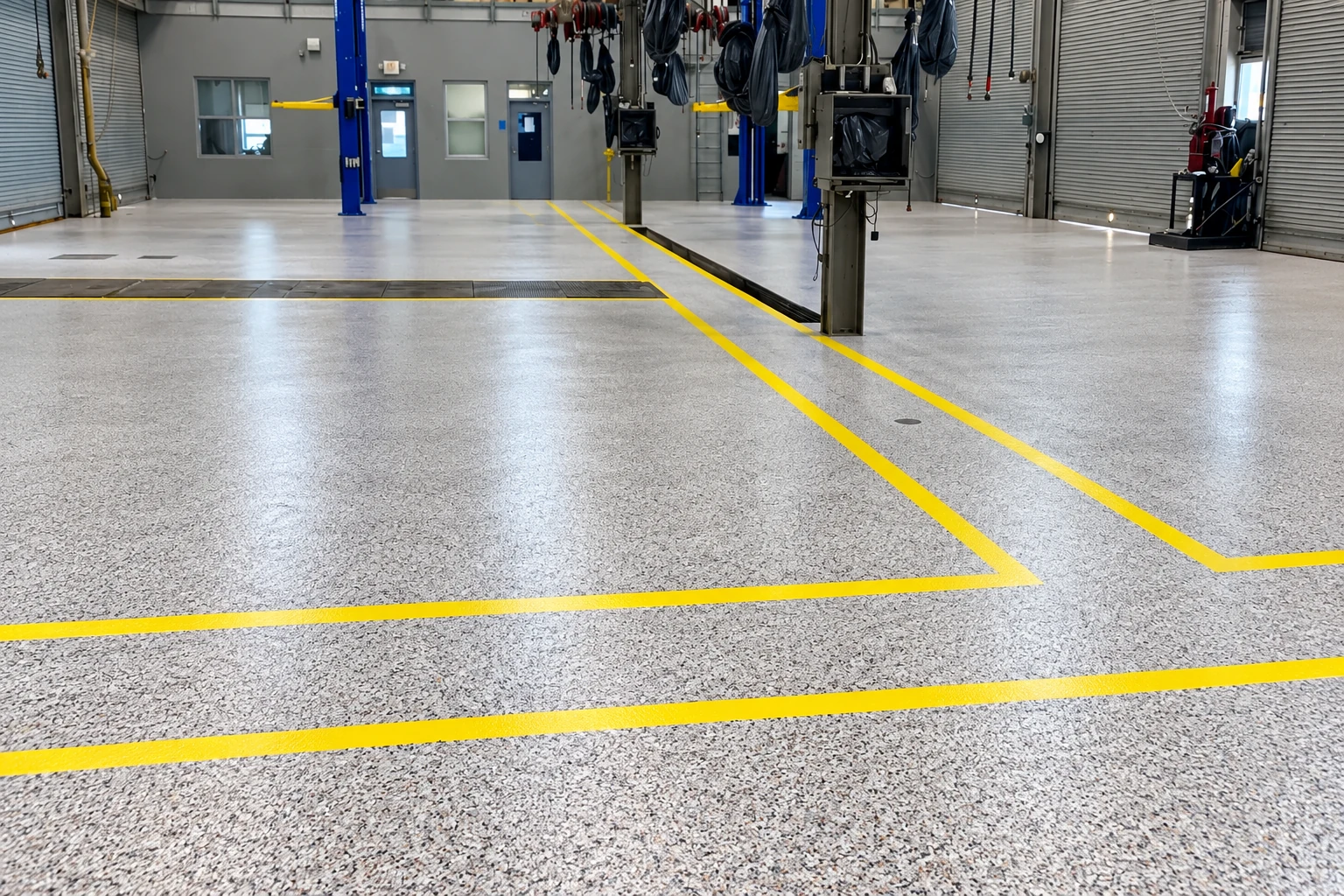
Heavier coating systems for packing sheds, warehouses and shops where forklifts, pallet jacks and wash-downs wear through ordinary floors. We work out the schedule with you so the business can keep running.
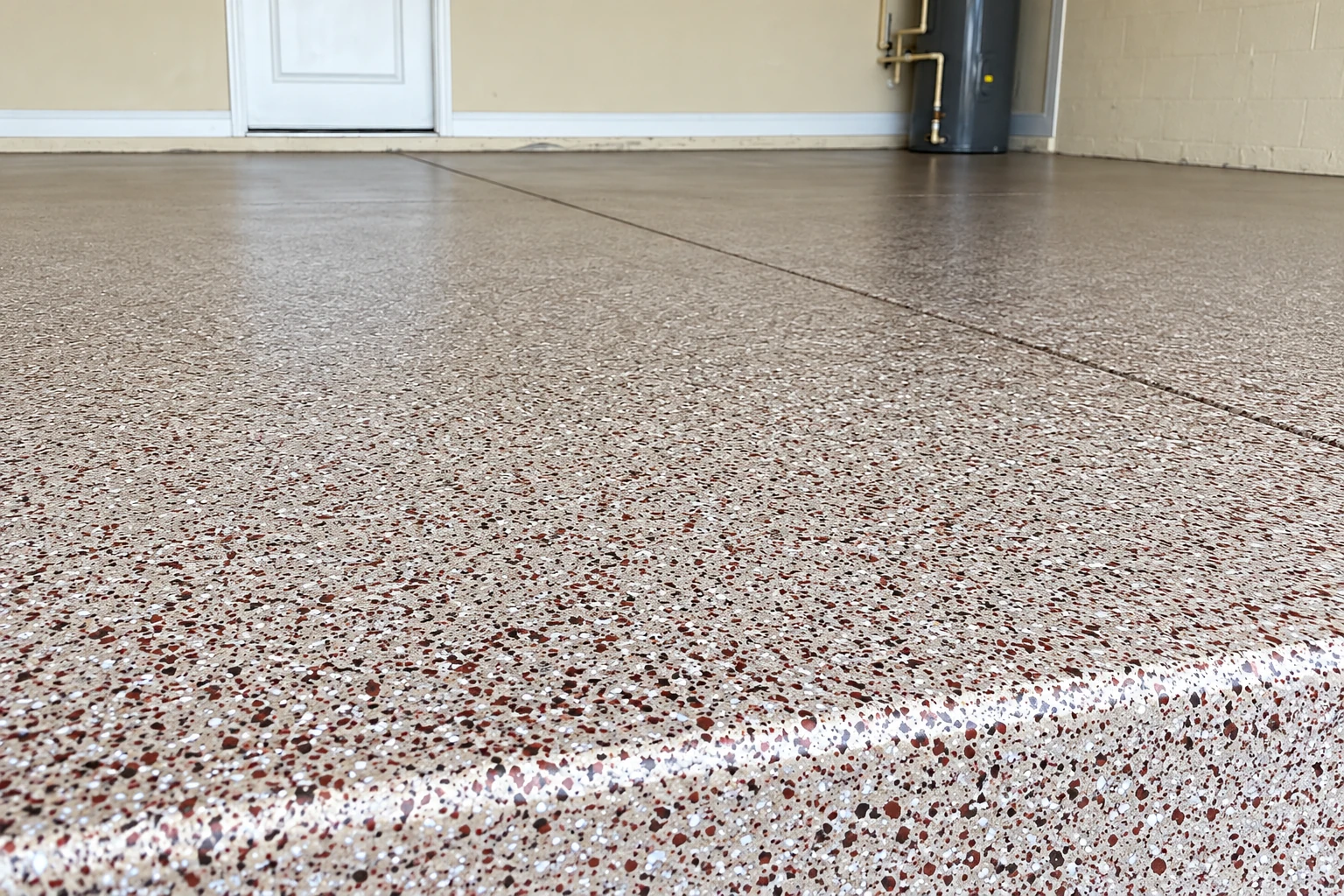
Garage slabs here often have cracks and old oil stains, so we grind, fill and degrease before a flake or solid coat goes on. You end up with a floor you can hose clean.
A fast-curing coating that lets you park sooner than standard epoxy does, and it holds its color in sunny spots. It's a good fit for a garage you can't give up for long.
A poured epoxy with metallic pigment that swirls into a deep, glossy finish for showrooms, home bars and finished garages. It shows every flaw underneath, so slab prep matters even more.
A cement-based floor for kitchens, food processing rooms and cold storage, where hot water, cleaners and temperature swings break down thinner coatings. It's what we suggest for a floor that gets washed daily.
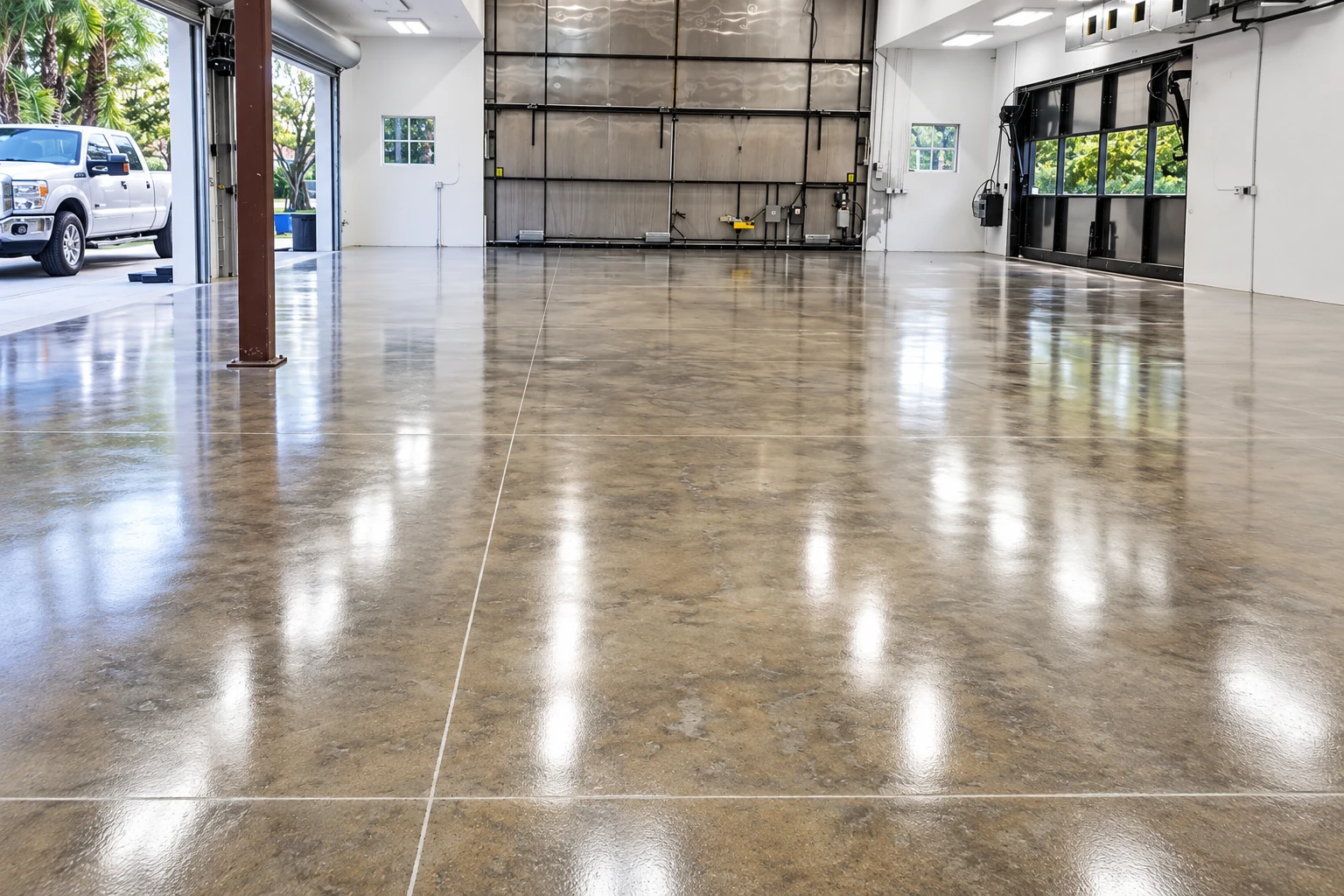
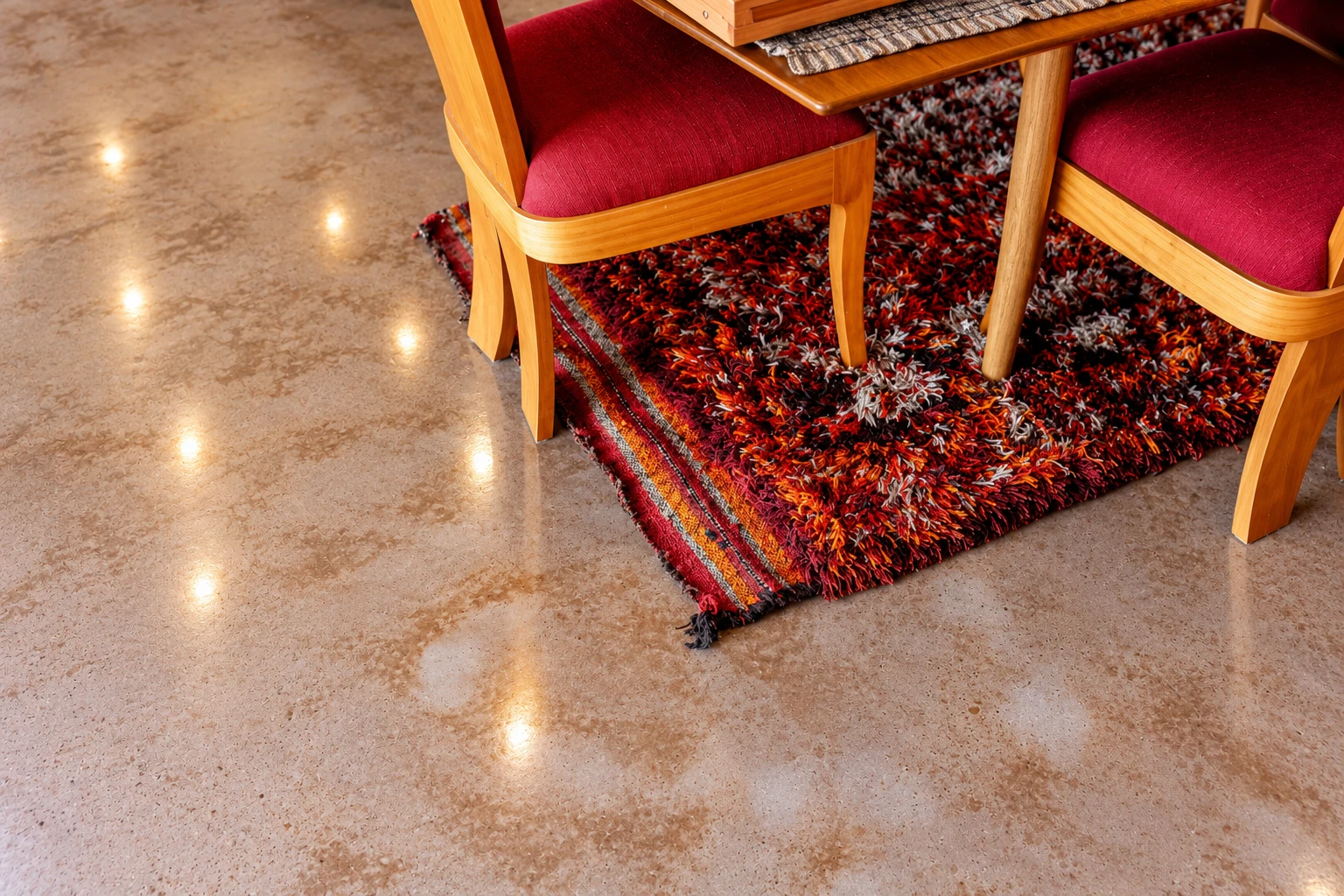
We grind the slab itself to a smooth sheen, so there's no coating to peel. Cracks and patches still show through, and I'll tell you straight whether your slab suits it.
Acid or water-based stain soaks into clean concrete for a mottled, earthy color on patios, entries and indoor slabs. We seal it afterward so the color holds up to foot traffic.
Epoxy terrazzo is chips of glass or stone set in resin and ground flat. It's for lobbies, entries and floors you want to keep a long time, and it's a bigger job than a coating.
Below-grade slabs pull moisture from the ground, so we test first and pick a system that can handle what we find. Skipping that test is how basement floors end up bubbling.
We diamond-grind the slab so a coating can grip, clearing off old sealer and high spots. That's the step most peeling floors skipped, and we cut out and fill cracks from shifting ground here too.
A clear sealer for driveways, patios and bare garage floors that need protection from stains and water more than a new look. It's a lighter job than a full coating.
A thin cement overlay over worn, pitted or patched concrete gives you a fresh surface without tearing out the slab. It works when the slab underneath is solid, not still moving.
A pourable underlayment that flattens dips and uneven spots before tile, vinyl or a coating goes down. We usually pour it over older slabs that have settled out of level.
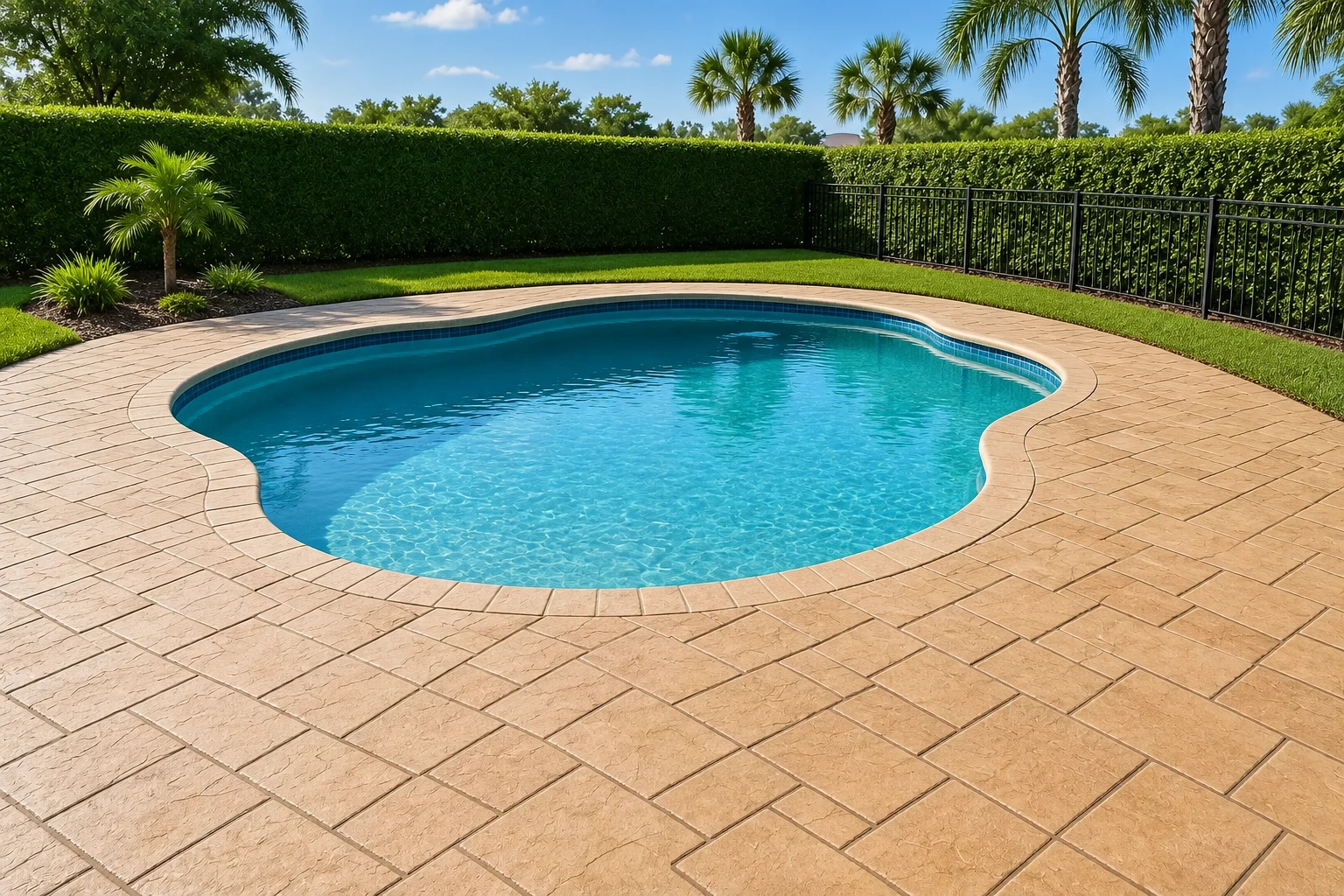
We patch cracks and resurface or coat pool decks with a textured finish that's easier on bare feet and less slick when wet. Before anything goes on, we check how the deck is moving.
We grind or scrape off failed epoxy, old paint, mastic and tile glue so the next floor bonds to clean concrete. Coating over a peeling floor just buys you a second peeling floor.
Send the form and we'll reply within one business day to set a time for me to come out. The estimate is free, it comes in writing, and there's no obligation.
I measure the floor and test the slab myself. A price guessed from photos usually misses the cracks and dampness that decide how the job goes.
The written estimate lays out the prep, the repairs and the coating system. That way you know what each part covers and can compare it fairly against anyone else's number.
If a clear sealer or a plain epoxy coat will do the job, I'll tell you, even when that means a smaller job for us. You pick what fits your floor and budget.
Here's what Watsonville homeowners and business owners usually ask us before a garage, patio or shop floor job, starting with permits.
The city's permit list doesn't settle it, so we ask the city before we start. The city gives examples of minor work that typically needs no building permit, such as painting, vinyl-type resilient floor covering and uncovered concrete patios. Floor coatings aren't on that list, and the city says its examples are only some of the exempt projects. Planning or encroachment permits can still apply.
The city's Building & Safety Division, part of the Community Development Department, issues them. You can call 831-768-3050 with questions, walk in or book an appointment. Most residential projects can get an over-the-counter plan check, a review of your plans at the counter, on Wednesdays from 8 to 11 AM. Simple jobs sometimes get a permit on that first visit.
If work that needs a permit starts without one, a city inspector issues a Stop Work order right away. Whoever started the work then has to apply for the permits and pay fees of up to double the original. Covered work also gets uncovered for inspection before the order is lifted. On a floor job, that can mean losing a fresh coating.
Yes. The city requires a soils report for all new construction because Watsonville's soil is expansive. A coating on an existing slab isn't new construction, but it sits on the same soil that cracks and lifts slabs here. That's why I look at how your slab has moved before we price anything over it.
Contractors who get Watsonville building permits need a current State of California contractor's license. A contractor who uses employees also has to give the city its workers' compensation insurance company and policy number. We're licensed and insured, and you're welcome to ask me about it when I come out.
These cities have their own page here, and we also work in plenty of places between them. If you don't see yours, call (831) 204-4420 or send the form and ask.
We take calls into the evening and on weekends, so call (831) 204-4420 when you're home with the floor in front of you, or send the form.