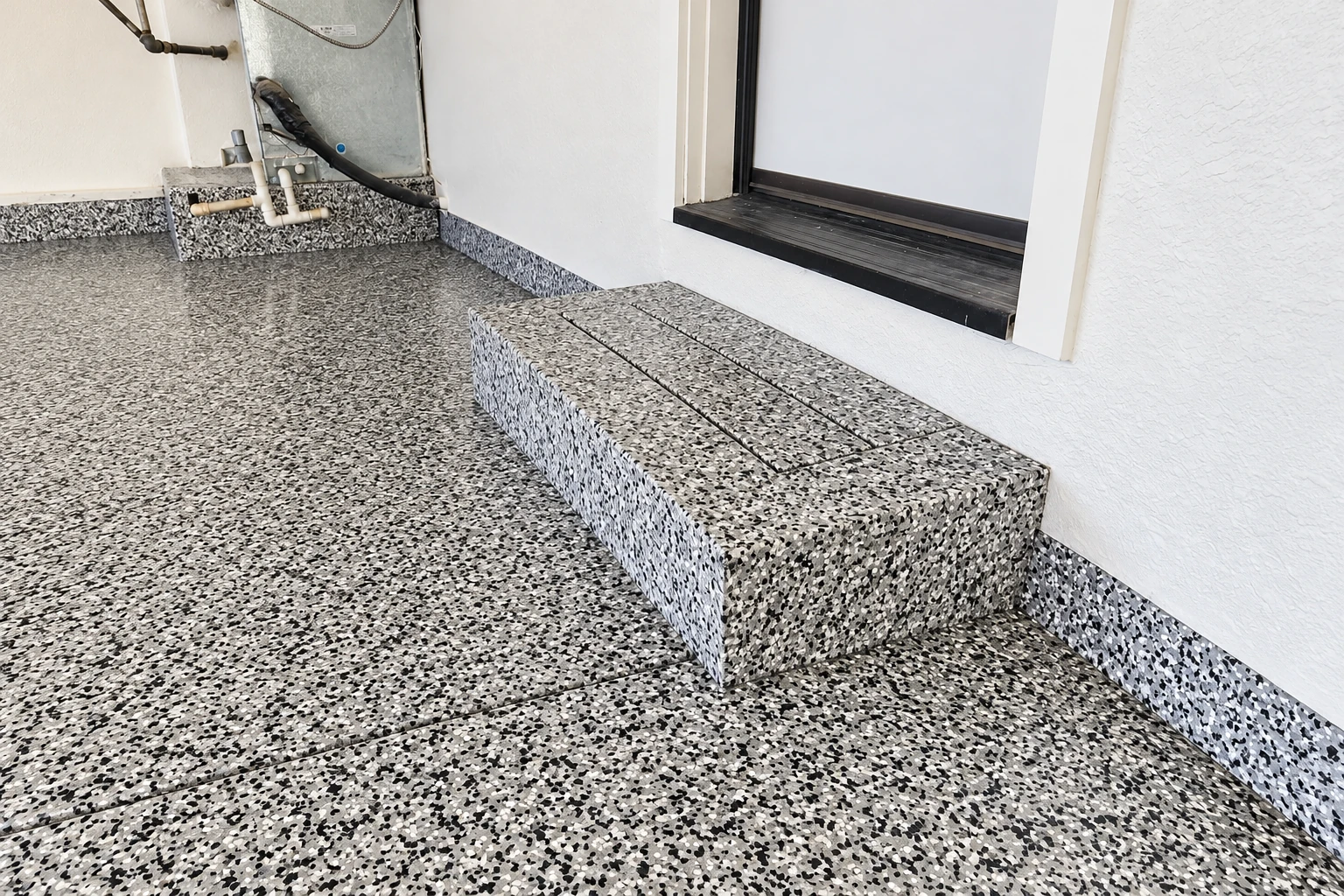
Epoxy Floor Coatings
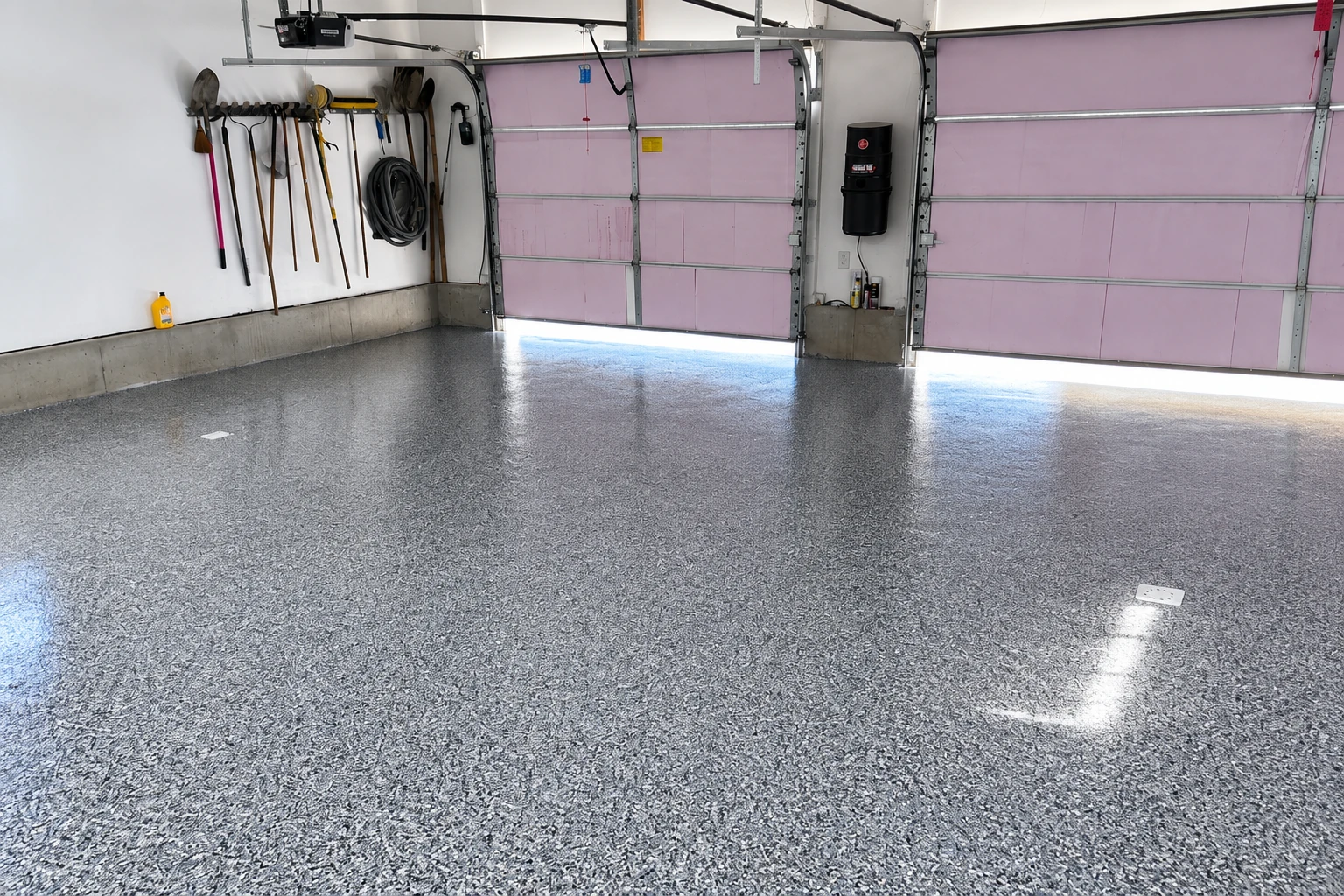
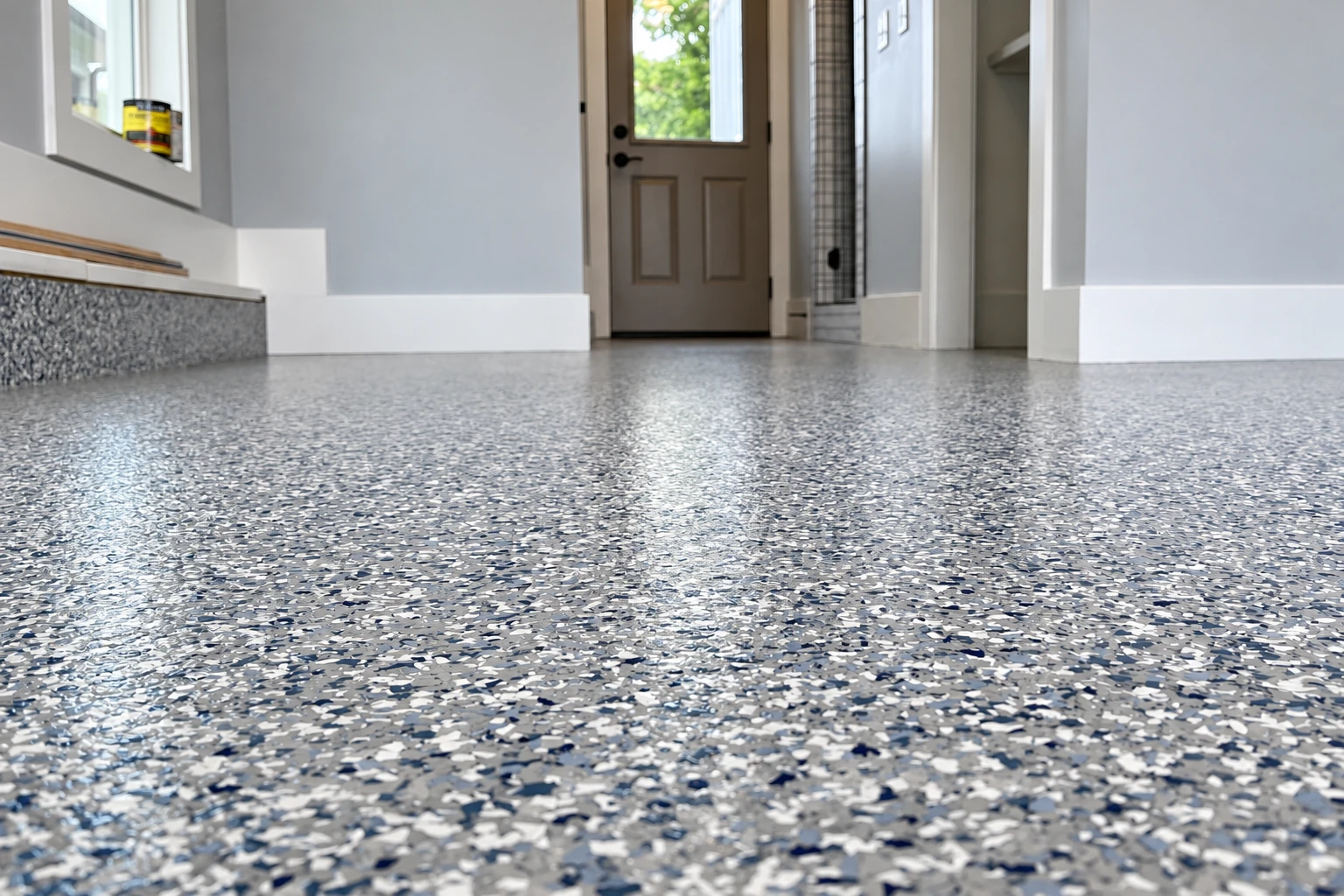
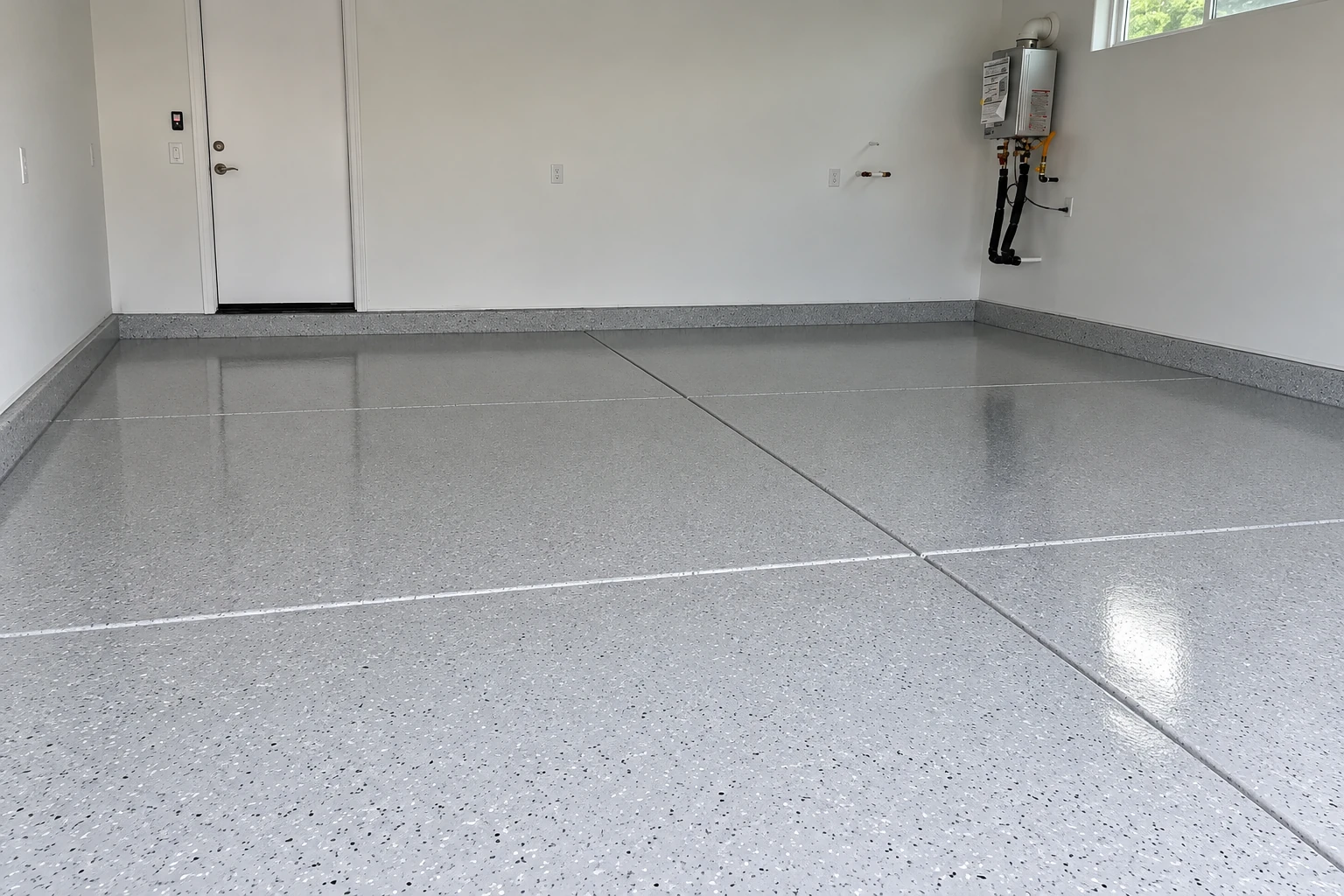
Most garage and shop slabs we see around Monterey have been patched or painted over the years, so we grind back to clean concrete before the first epoxy coat goes down.
Truefinish Monterey Epoxy Flooring is a flooring contractor in Monterey, CA. We grind, coat, polish and seal concrete floors in garages, basements, patios and shops around the city, and we do the prep before any finish goes on.
I started this business in Monterey in 2013, and it's still where a lot of our calls come from. Homeowners want the garage, basement or patio done, and business owners call when a floor has to take a beating. Many of the slabs we walk onto here come with some history, a patch from one owner, paint from the next and a sealer nobody remembers putting down, and that history decides how much grinding happens before anything new goes on.
Price comes down to the size of the floor, how much has to come off before we can coat it, the cracks and low spots to fix, and the system you pick, since a polish or a sealer is a simpler job than a multi-coat epoxy. The schedule turns on that same prep, the cure time between coats and whether the job needs a city permit first. I look at the floor in person and you get the estimate in writing, so you're working from your own numbers instead of a guess.
We're based here but work all over the peninsula, so the same crew that does a Monterey garage is also coating floors in Pacific Grove and Seaside, and up through Salinas and over to Watsonville.
Most floors that peel or bubble were rushed before the first coat went on, so we grind, patch and clean until the concrete is ready, even when that's the slow part.
If a sealer or a polish suits your floor better than a full coating, I'll tell you, because I'd rather you pay for what the floor needs and nothing more.
When a job might need a permit, we check with the city or county building office before any work starts, and if one's needed we take care of the paperwork with you.
Most garage and shop slabs we see around Monterey have been patched or painted over the years, so we grind back to clean concrete before the first epoxy coat goes down.
For shops, warehouses and showrooms that take carts, forklifts and spills, we put down heavier epoxy systems and plan the work around your open hours as best we can.
Garages here double as gyms, workshops and storage, so we pick a coating that handles hot tires, dropped tools and oil, then add grit where you'll be walking in wet shoes.
Polyaspartic cures faster than epoxy, which is handy when you need the garage back soon, but it gives us less working time, so prep has to be finished before we open a can.
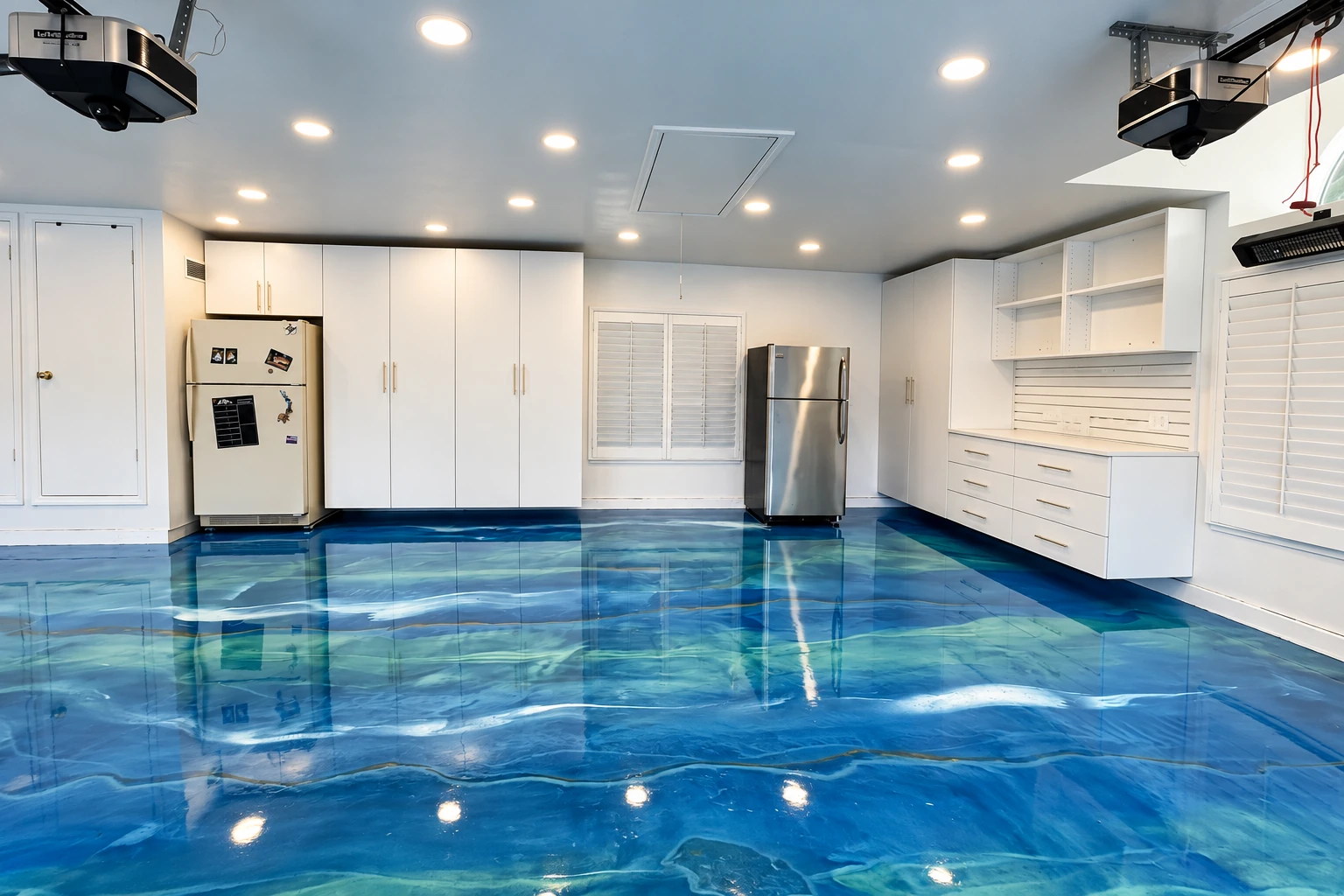
Metallic epoxy gives a basement, bar or showroom a swirled, pearly look, and since every pour moves a little differently, you should know going in that no two floors come out alike.
For commercial kitchens with hot washdowns, urethane cement holds up where standard epoxy can struggle, and we run it a few inches up the walls so water can't get under.
If your slab is sound, polishing it with finer and finer diamonds gives you a hard, shiny floor with no coating on top to peel or recoat later.
Stains soak into the concrete for a mottled, earthy color, and because stain shows every patch and glue mark, we look the slab over closely before you pick one.
Terrazzo sets chips of glass or stone in a binder that we grind and polish smooth, and it suits entries and lobbies that see heavy foot traffic for years.
Basement slabs can push moisture up from below, so I test before we pick a system, because a coating over a damp slab is a quick way to get bubbles and peeling.
We grind off old paint, sealer and glue and open up the surface so the new coating has clean, rough concrete to grip instead of a slick old layer.
A clear sealer keeps oil stains and dust down on a patio, driveway or bare garage slab, and sometimes it's all sound concrete really needs instead of a full coating.
When a patio or walkway is pitted, flaking or stained past cleaning, a thin cement overlay gives you a fresh surface without tearing out concrete that's still solid underneath.
Older slabs with dips, humps or ridges from old tile get a pour of self-leveling cement, a runny mix that settles level on its own, so the new floor sits flat.
Pool decks take bare feet, pool chemicals and dragged chairs, so we patch cracks and put down a textured coating that's easier on feet and gives some grip when wet.
We strip failed epoxy, old paint, tile and carpet glue down to bare concrete, which can take longer than putting the new floor down, so I size it up in person.
Send the form and we'll reply within one business day to set a time for your free on-site estimate, with no obligation to go ahead.
I come out to look at the floor, measure it and test the slab myself, so your written estimate is built on your concrete and not on a photo or a guess.
Our crew does the work with my lead installer running the job, and I'm on site checking in, so the person who looked at your floor keeps an eye on it.
We're licensed and insured, we've been in business since 2013, and the work is backed by our satisfaction guarantee, so you know who's standing behind your floor.
Here's what Monterey homeowners usually ask us about permits, contractor licenses and old flooring before a coating or polish job starts.
Maybe, and we find out before we start rather than guess. The city's permit list covers work like re-roofs, wiring, plumbing and patio covers, so for a floor we check with the Building and Safety Division and handle any paperwork with you. If one's needed, plan review takes at least 15 business days on smaller projects, which we plan around.
Yes, in almost every case. The state's Contractors State License Board requires a license when the work needs a building permit, uses employees, or adds up to $1,000 or more in labor and materials, and a contractor needs it before bidding. In Monterey, a contractor also needs a current city business license and workers' comp coverage before the city issues a permit.
If your job needs a building permit, the city's application has you declare that you've contacted MBARD at 831-647-9411 to find out whether federal and local asbestos rules apply. It comes up most when we're stripping old tile or glue off a slab, so it's part of the paperwork we go through with you before anything gets pulled up.
These are the cities with their own page on our site, and they're not the only places we go. If your address isn't listed, call or send the form and ask.
We answer evenings and weekends too, so call (831) 204-4420 or send the form with a few lines about your floor.